Table of Contents
Which PSP to Choose: PSP-1000, 2000, 3000, GO and Street Comparison
Friends, there’s a new article on the site: EZ-Flash Air Review: Features, Limitations, and Comparison with Other Models.
ChisLink - a revolution in the GBA world.
Friends, AliExpress now has:
Cool metal labels for Game Boy Advance consoles. Important: the OMEGA series will no longer be produced — it is being replaced in the lineup by the EZ-Flash Air.
Cool eXtremeRate cases for GBA SP.
Friends, help me buy (if you have) various old stuff: Help me buy.
Which PSP to Choose: PSP-1000, 2000, 3000, GO and Street Comparison
How to quickly distinguish the version of PlayStation Portable (PSP)?
Sony PlayStation Portable became a cult console, especially in the CIS. Many players literally grew up with this portable system in their hands.
Unlike Nintendo, Sony has firmly established itself in the Russian market. PSPs always appeared here as part of a unified sales launch, and all major game hits were translated into Russian.
During its existence, several versions of the PSP were released, each with its own features and improvements. Let's take a look at them:
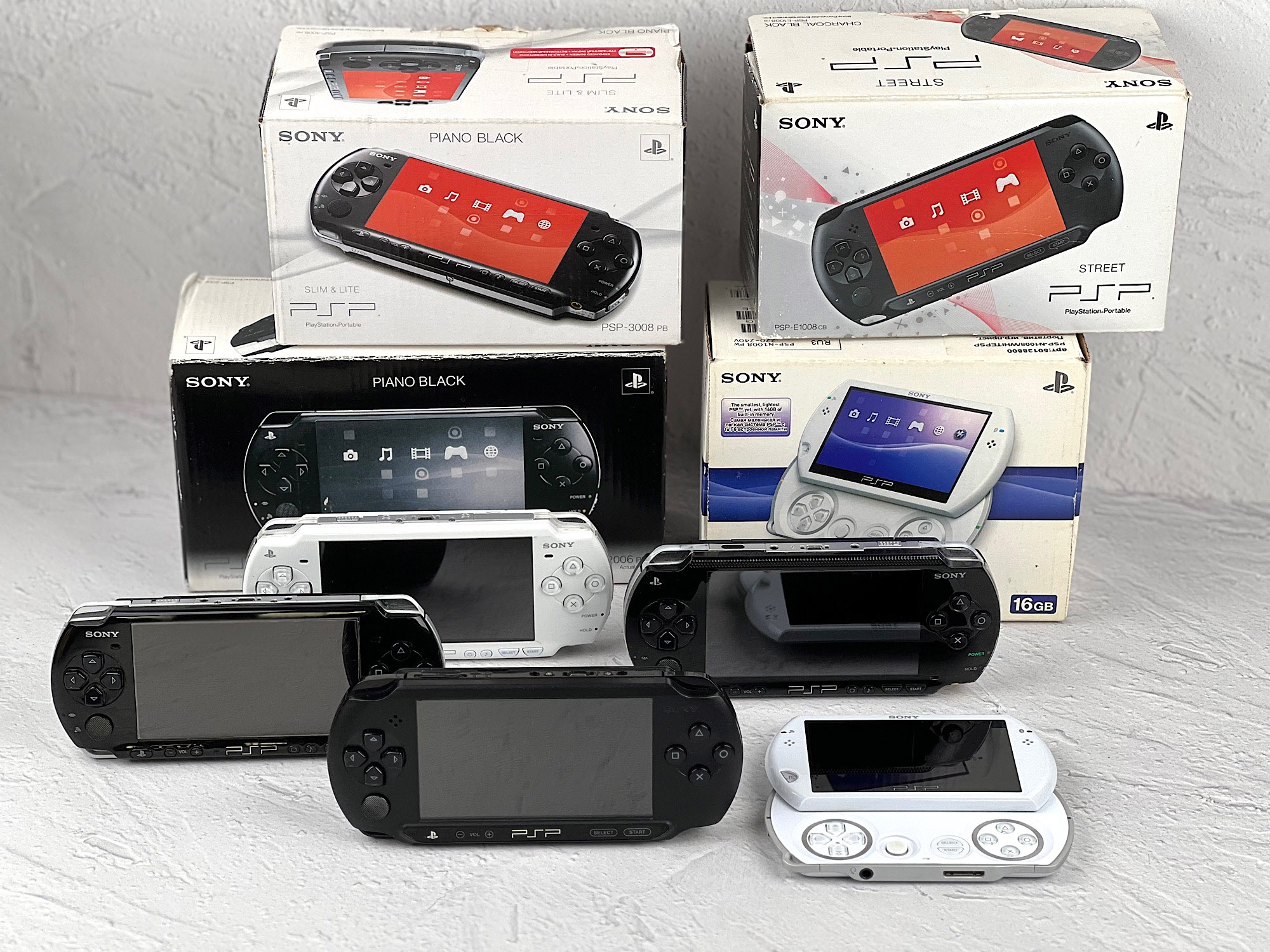
1. PSP-1000 (Fat);
2. PSP-2000 (Slim & Lite);
3. PSP-3000 (Bright);
4. PSP GO (N1000);
5. PSP-E1000 (Street).
If you want to return to your childhood and buy a PSP today, you will face the question - which one to buy? The problem is that there is no perfect version of the PSP, so let's figure it out.
General Information
PSP is a seventh-generation portable console created by Sony.
All PSPs were equipped with a dual-core MIPS R4000 processor with a clock speed of 333 MHz and a separate graphics core with a clock speed of 166 MHz. The PSP also had 64 megabytes of RAM (with one exception, which we'll discuss later). All this power was designed to display images on a 4.3-inch TFT screen with a resolution of 480 by 272 pixels and an aspect ratio of 16:9.
The screen is what set the PSP apart from all its competitors.
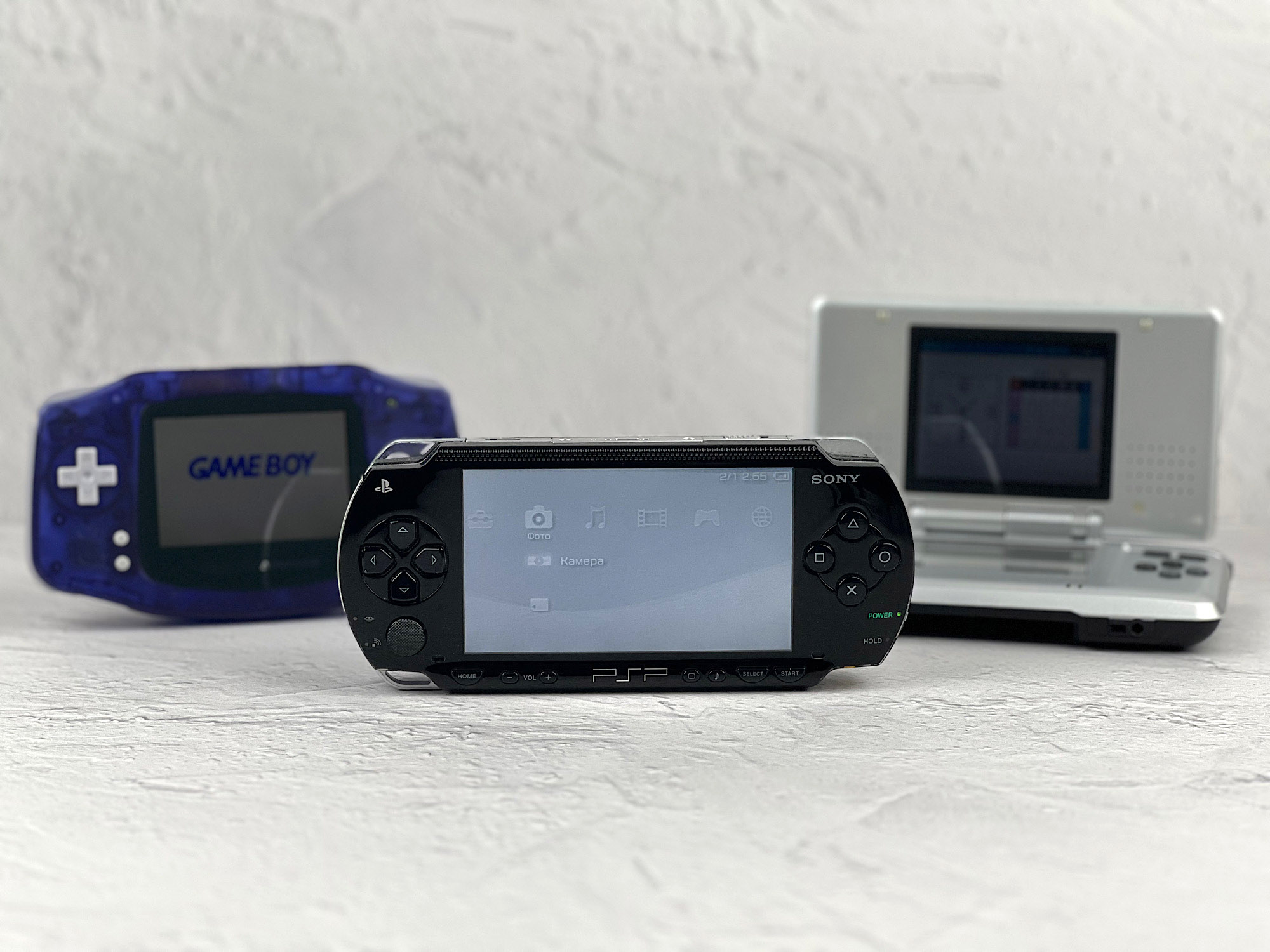
The size and aspect ratio were something incredible for 2005. When Sony developers said they wanted to create a portable PlayStation 2, they weren't lying.
Initially, the PSP was designed to run UMD (Universal Media Disk) discs. These discs had an impressive memory capacity, ranging from 900 MB (with single-layer recording) to 1.8 GB (with dual-layer recording).
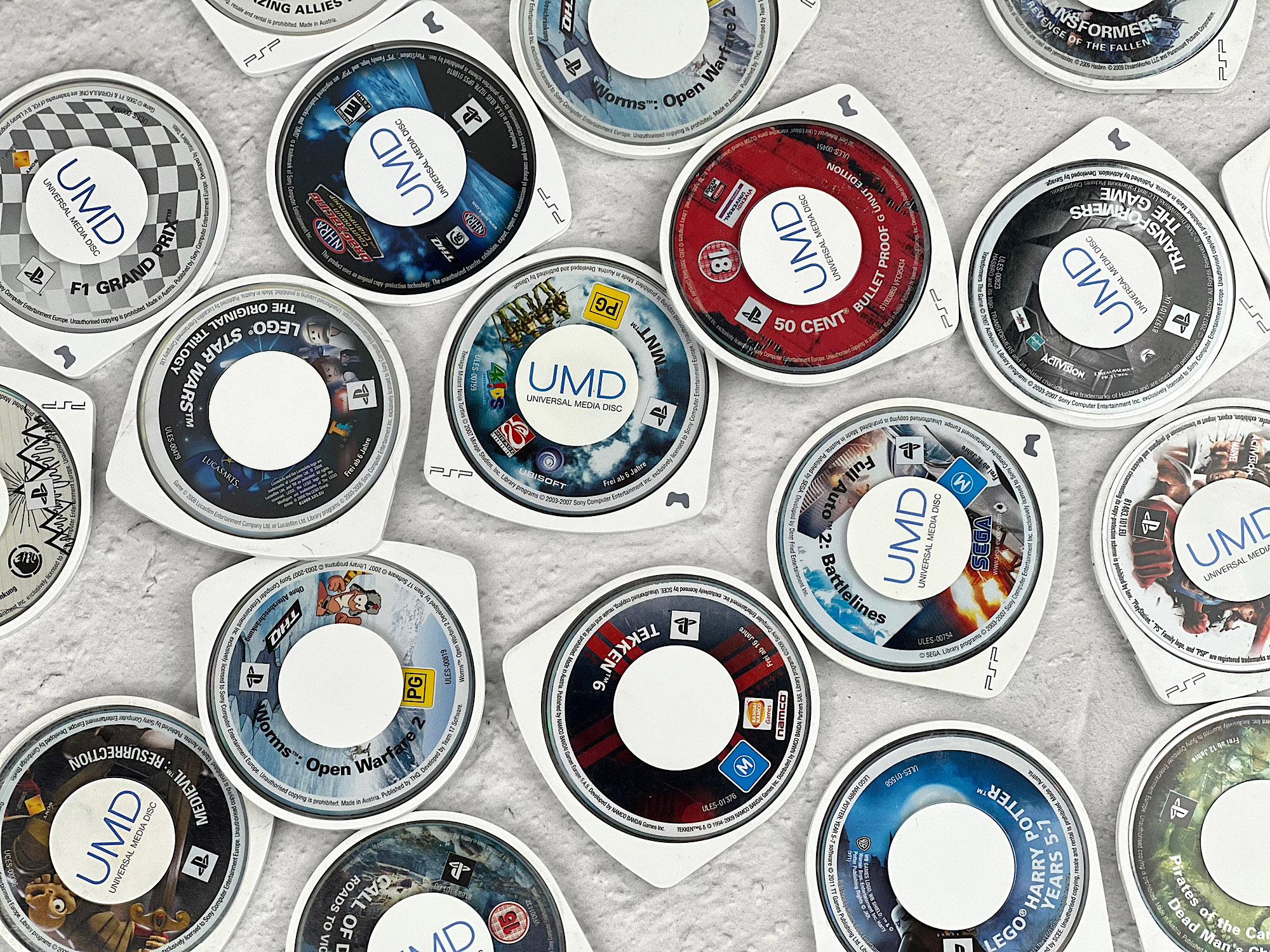
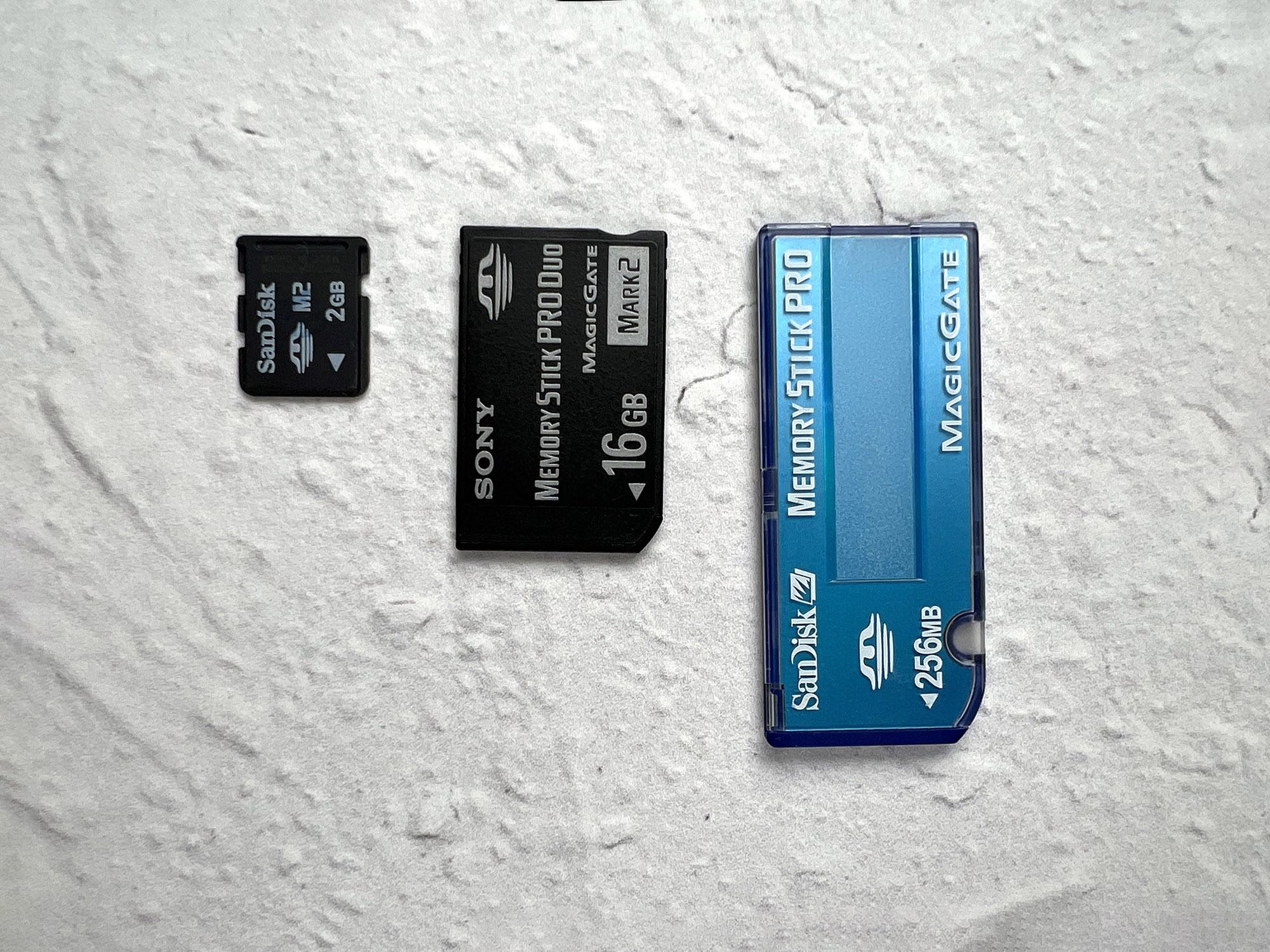
Later, Sony focused on the online store. However, this store was not very popular, as it did not have many old releases, and not all new games made it there. These games were downloaded and installed on a memory card. Sony used the proprietary Memory Stick standard for PSP, specifically Memory Stick PRO Duo and Memory Stick Micro (M2).
Perhaps the biggest drawback of all PSPs is the lack of a second analog stick.
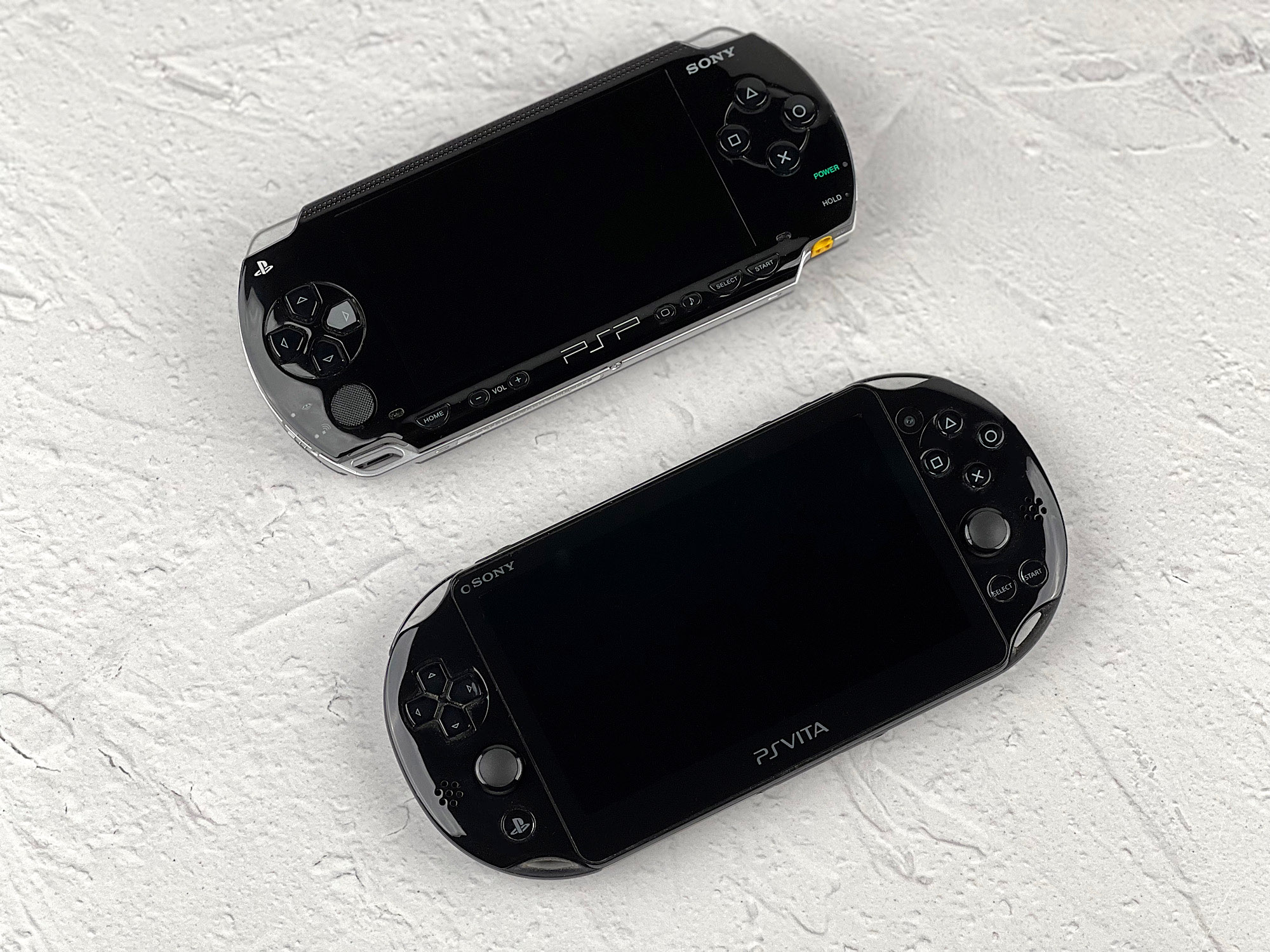
The developers said that you might get confused with the controls. They quickly realized their mistake, but could not fix it. The appearance of a PSP version with a second stick would essentially mean the emergence of a new console, and then the games would not be compatible with older PSP versions.
Now let's move on to the consoles themselves.
PSP-1000 (Fat, Fatty)
At the end of 2004, Sony released the first version of the PSP, which later became known as the Fatty.
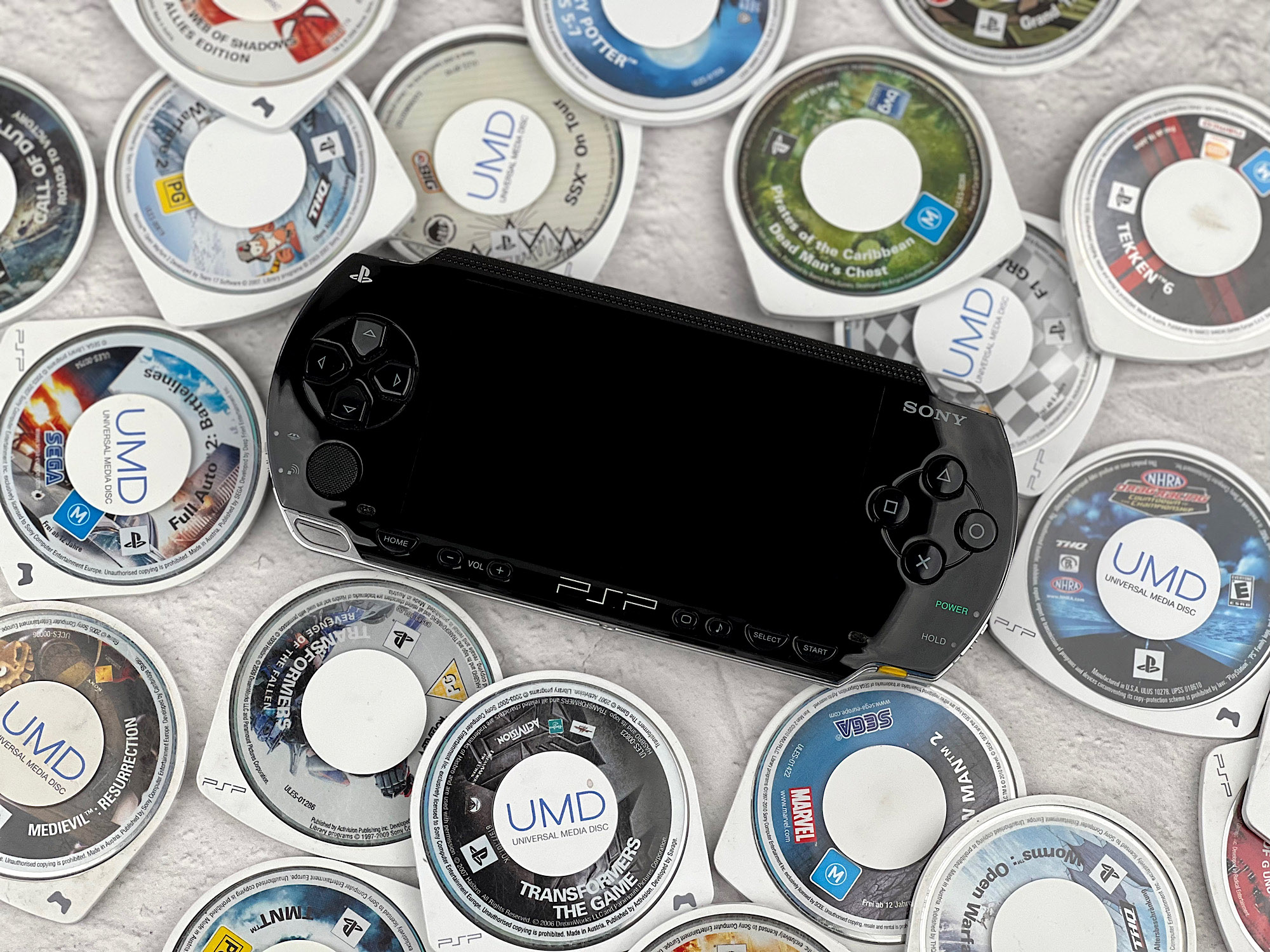
This name didn't come out of nowhere. The PSP-1000 is much thicker than its siblings. It has large dimensions:
Length: 170 mm;
Width: 74 mm;
Thickness: 23 mm.
At the same time, it is quite heavy - 280 grams. For comparison: the Nintendo DS Fatty weighed 275 grams, while being significantly larger in size.
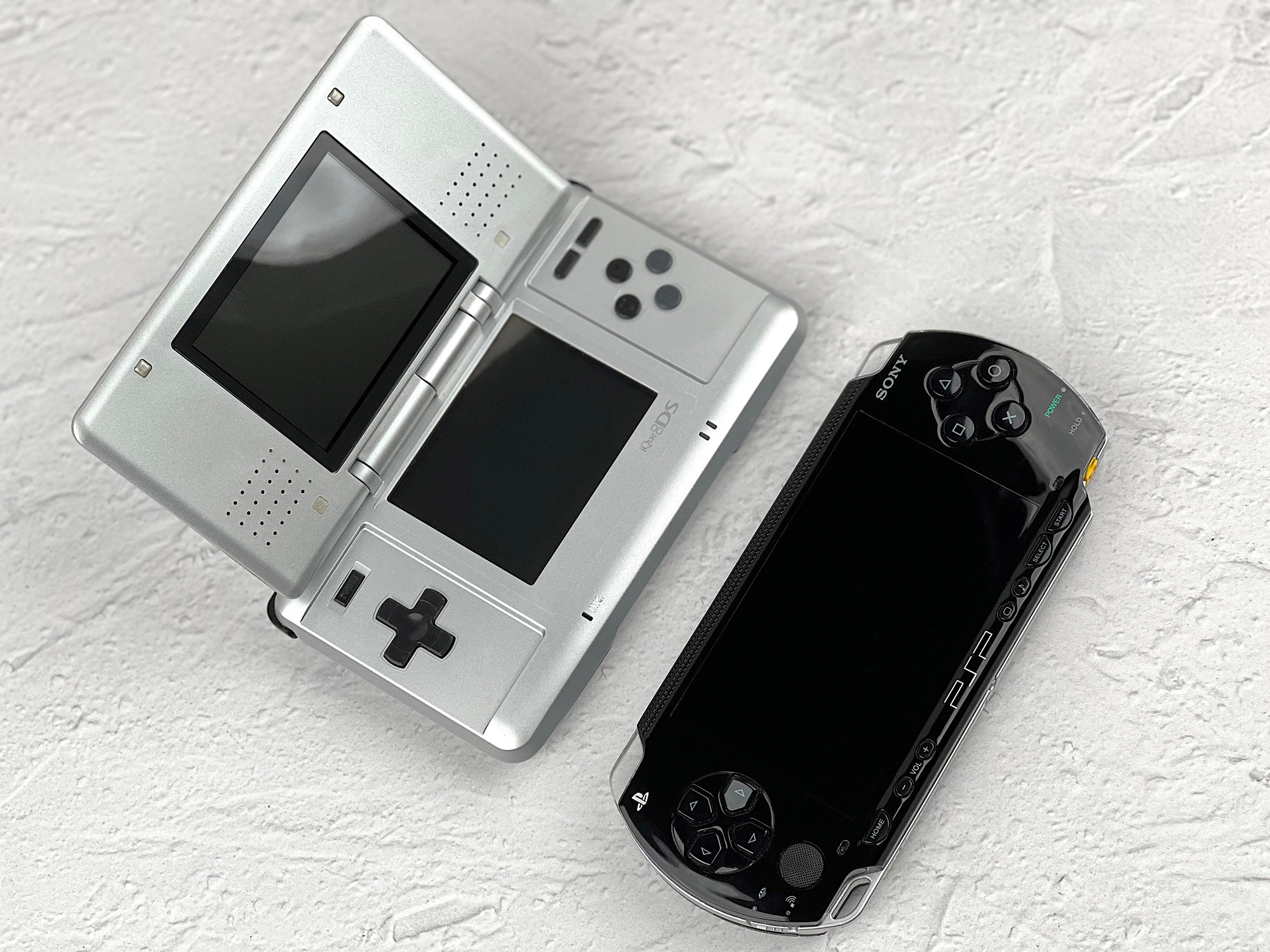
This thickness was not accidental. The PSP-1000 has the largest battery, with a capacity of 1800 mAh. However, according to the developers, this did not affect the overall battery life of other consoles, as they themselves were more energy efficient.
The battery is perhaps the most significant drawback of this version of the console (though not unique to this model). Over time, they would swell and could explode. In those distant years, I had two PSPs (1000 and 2000), and both of their batteries swelled. So, with a high degree of probability, you won't find a PSP-1000 with an original battery now.
The PSP-1000 is the highest quality model in terms of build. The automatic UMD drive opening system. When you insert a disc, it fits perfectly into the slot, and when you eject the disc, pressing the button opens the drive and lifts it slightly. The front panel of the console is glossy, while the back is matte and pleasant to the touch.
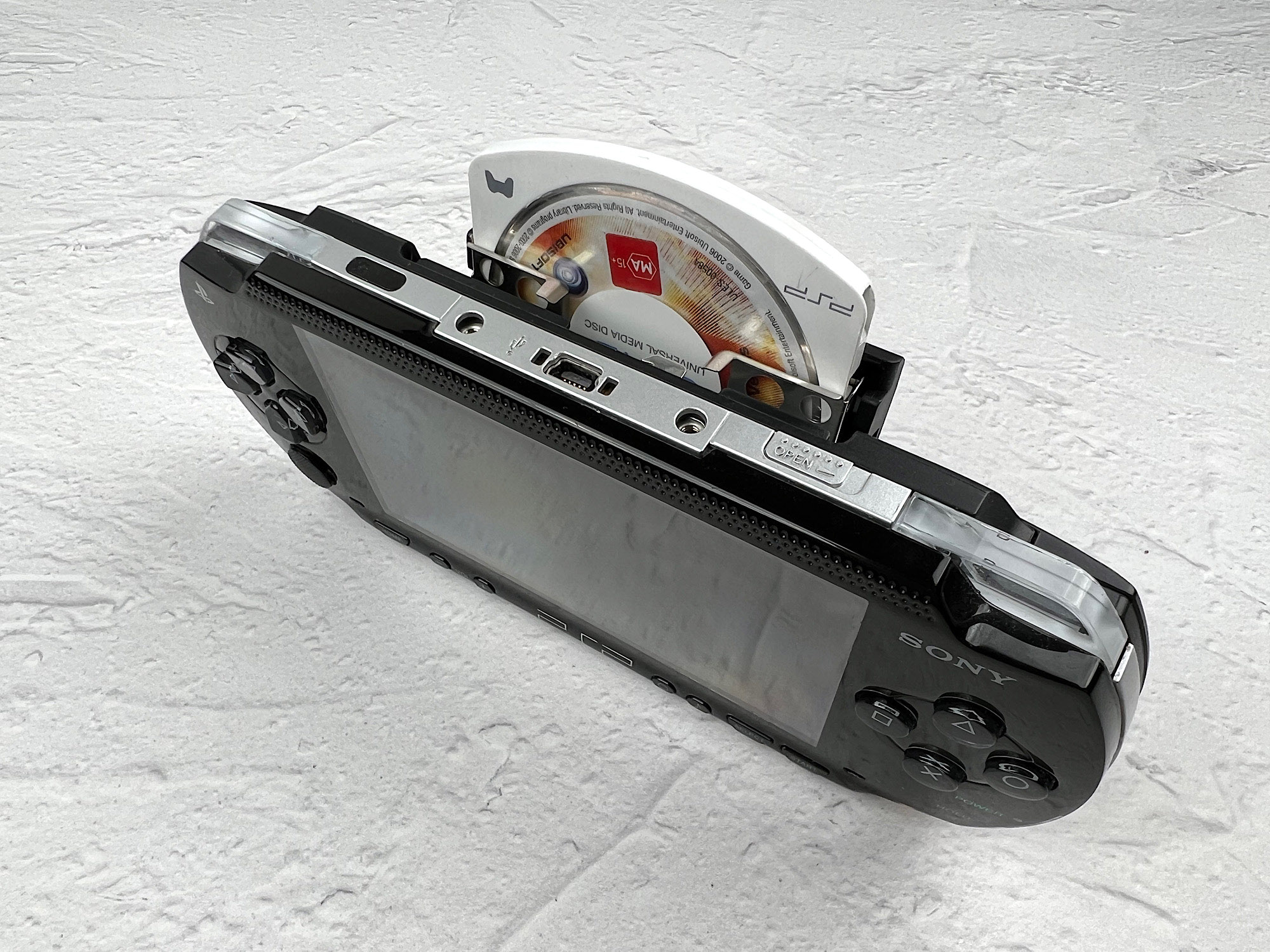
The Fatty is the only console that had an infrared port. However, to this day, no one knows why it was included.
Also, the PSP-1000 has only 32 megabytes of RAM, unlike the 64 megabytes in all other consoles in this family. The developers said that this should affect the speed of loading games, but I didn't notice any difference. The significant difference appears only if you load the game from a memory card, not from a UMD disc. Then the difference is colossal; the game from the memory card loads ten times faster.
In conclusion. The PSP Fatty is a good console and can be bought as a main one, but other versions are more preferable. I don't think you will really need the ability to connect the PSP to a TV, which was not available in the PSP-1000. But I am sure that the better screen, lighter weight, and other small details make the Fatty less preferable for purchase.
Especially since when buying this version, you will face the biggest problem - the lack of a battery. Often, after 20 years of storage, the original PSP-1000 batteries have swollen and been thrown away. This means that either you will play from the network, or you will have to look for a normal battery (and I haven't found any).
PSP-2000 (Slim & Lite)
In September 2007, sales of the next version, the PSP-2000, started in Japan. The console, which the developers called PSP Slim & Lite, meaning thin and light.
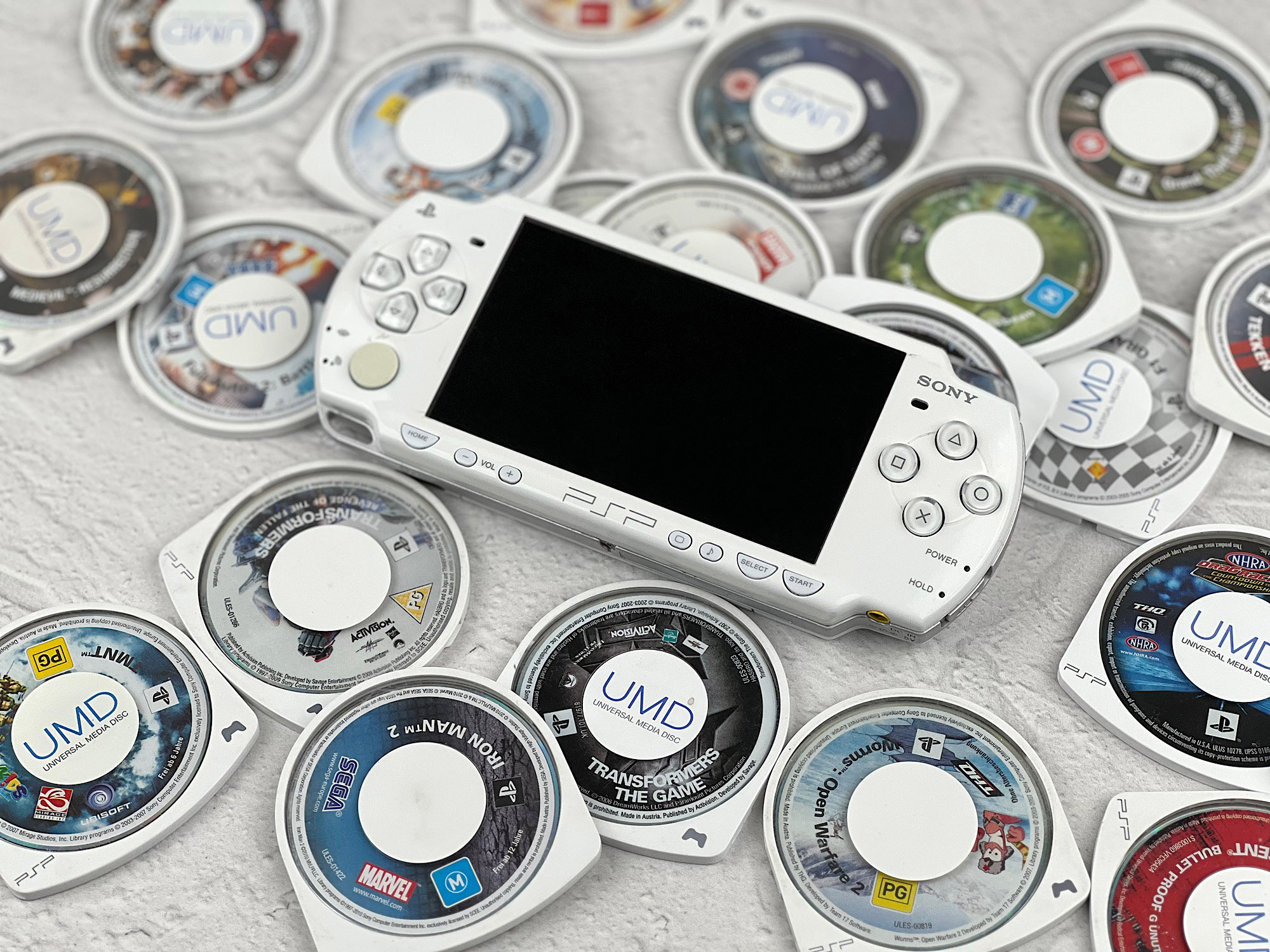
It can't be said that this is the thinnest and lightest version of the PSP, but it is definitely much lighter and more compact than the PSP-1000. Its dimensions:
Length: 169 mm;
Width: 71 mm;
Thickness: 19 mm.
And it weighed only 180 grams. When you hold the PSP-2000 in your hands, it feels like a mockup, it's so light.
Due to the lack of side protrusions and reduced thickness, the battery size had to be reduced to 1200 mAh.
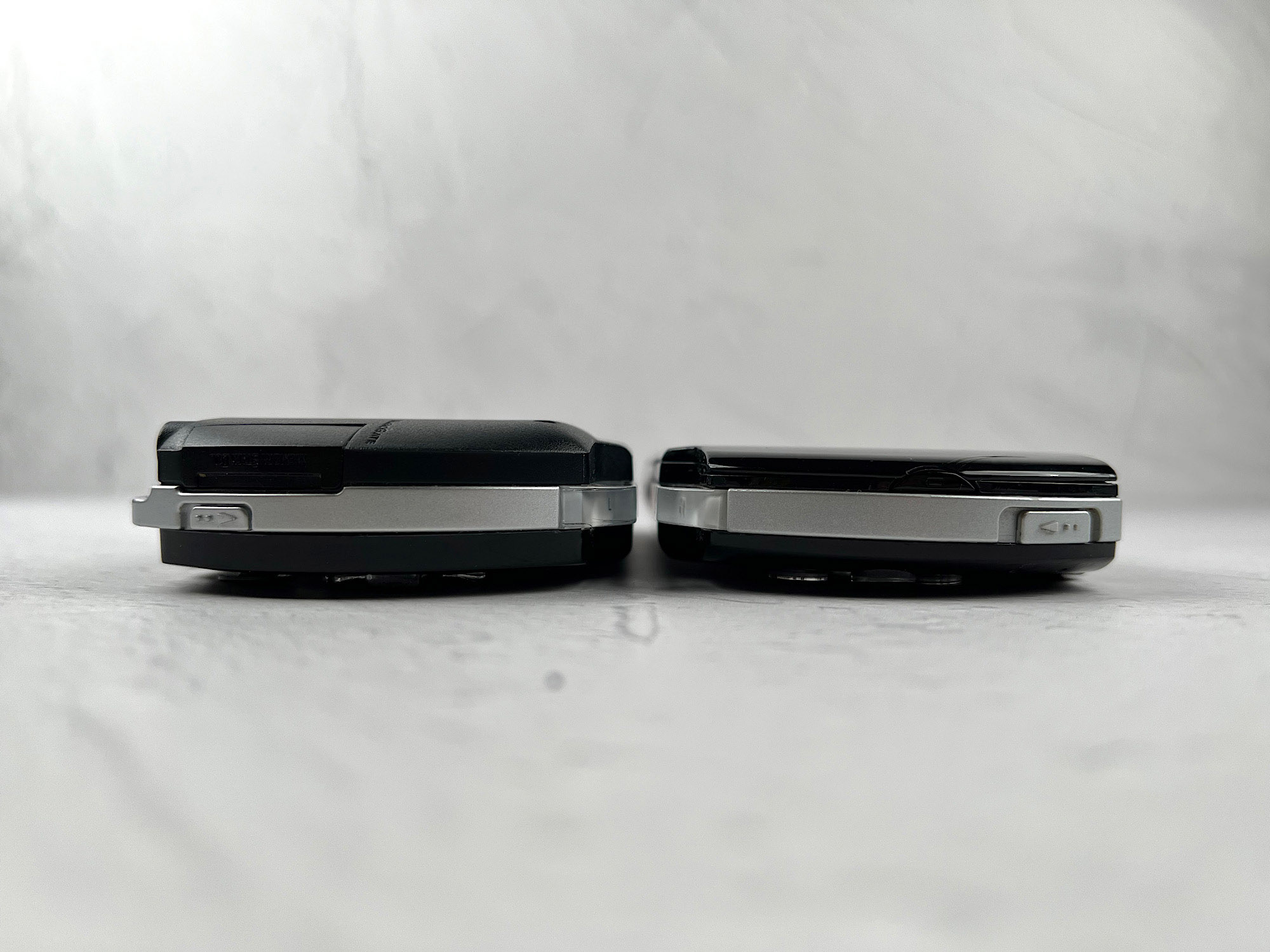
However, according to the developers, this does not affect the console's battery life. They say it is more energy efficient than the first version.
In this version of the console (as in all subsequent ones), the amount of RAM was increased to 64 megabytes. On the one hand, I did not notice any improvements in the original games. On the other hand, the difference is noticeable in homebrew applications. Most developers of such applications did not even bother to adapt them for the first version of the PSP.
The Sony developers also added the ability to output the console's image to a TV. It's not something you really need, but it makes my life easier, as I can take screenshots from the device and insert them into articles.
The PSP-2000 is more preferable for purchase solely due to its size and weight. If you want to take a console on a trip, you can look at this version.
PSP-3000 (Bright)
At the end of 2008, Sony released another version of the console - the PSP-3000. Its dimensions are exactly the same as the previous version.
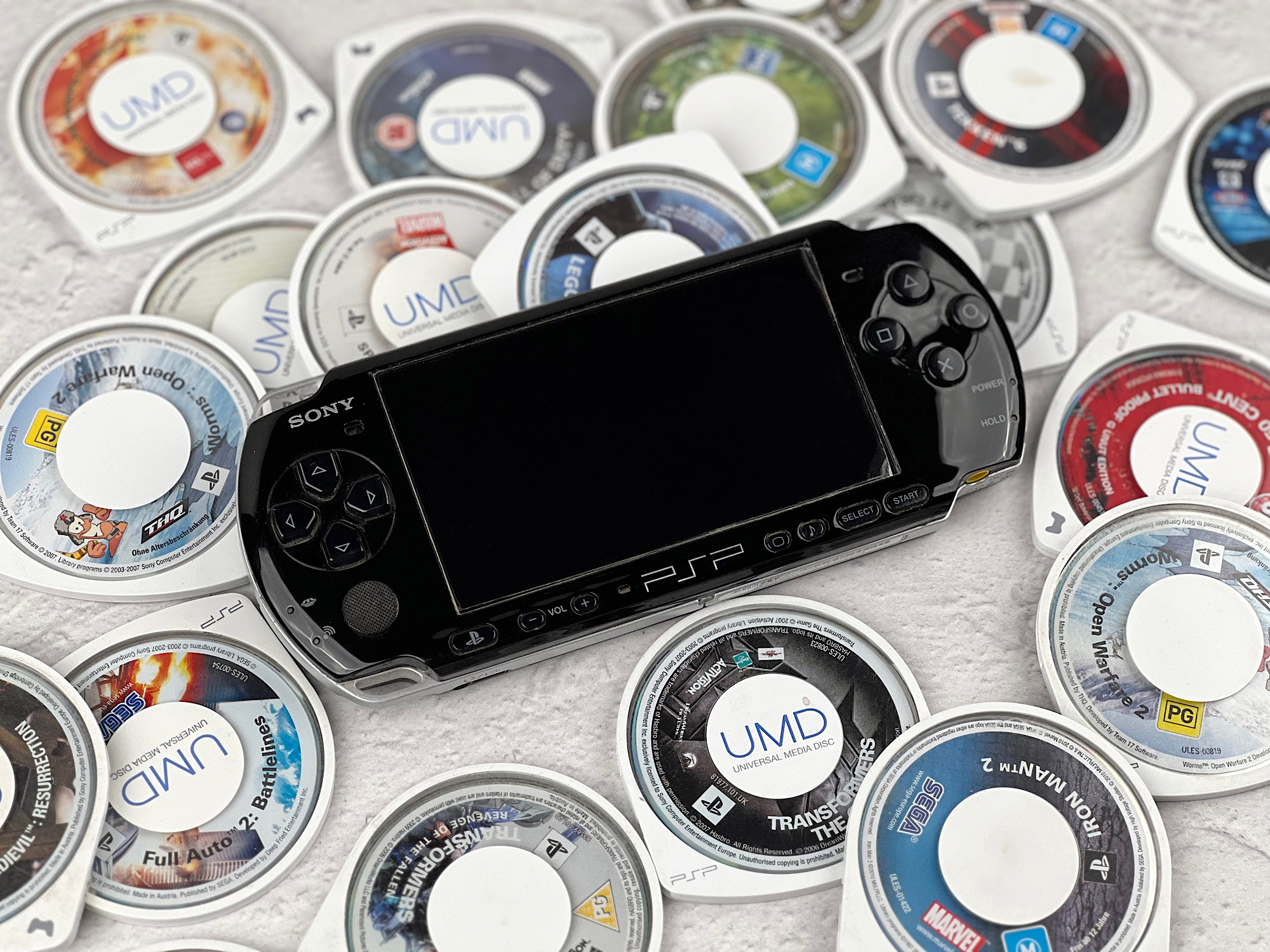
On one hand, the changes in this console are minimal: they added a built-in microphone and changed the screen. Many players thought that this was a slightly improved version of the previous model. On the other hand, the screen was indeed significantly improved. Look at how much more vibrant the image is on the PSP-3000.
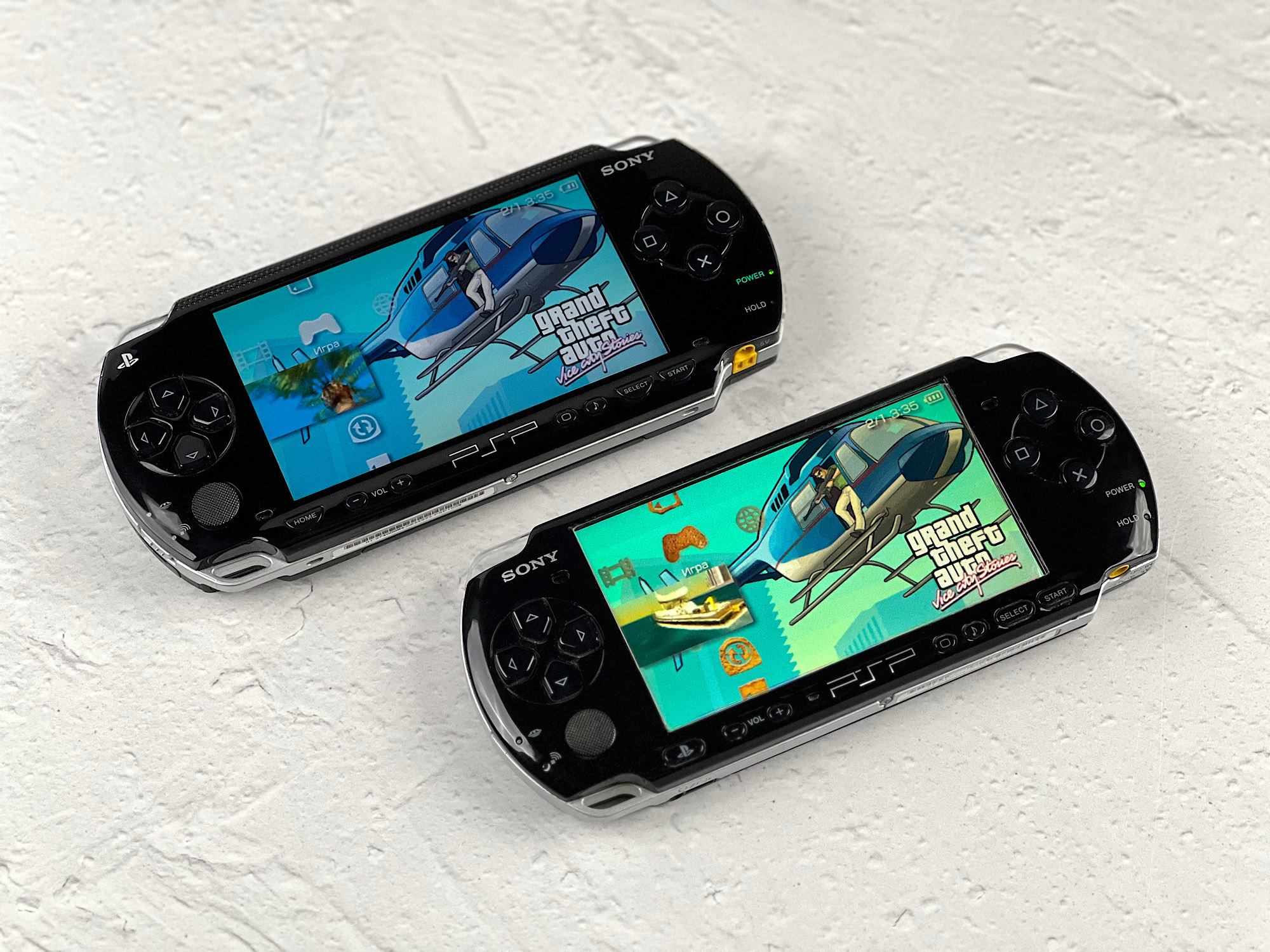
PSP-3000 at the bottom
The anti-glare coating was also improved! So playing in the sun became a bit easier.
However, there were some issues. Many players complained about interlacing. In fact, the problem was not with the interlacing, but with the pixel arrangement, which caused this effect.
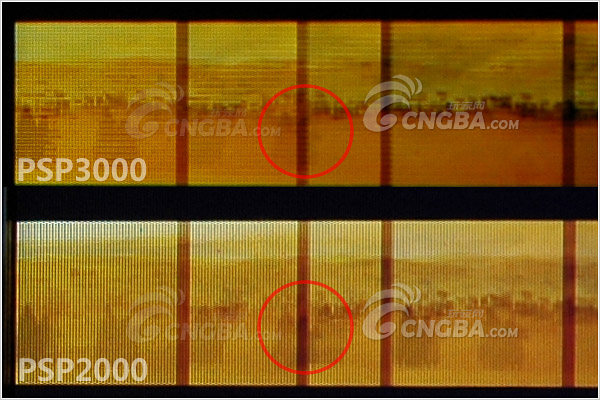
See? On the PSP-2000, the lines go from top to bottom, while on the PSP-3000, the lines go from left to right.
Of course, this is very individual. And if you plan to spend a lot of time playing PSP games, you will have to test it yourself. Many believe that the expanded color range of the PSP-3000 is not worth the screen line effect.
PSP GO (N1000)
In 2009, Sony decided to compete with Apple for the portable gaming market and released the fourth version of the console - the PSP GO.
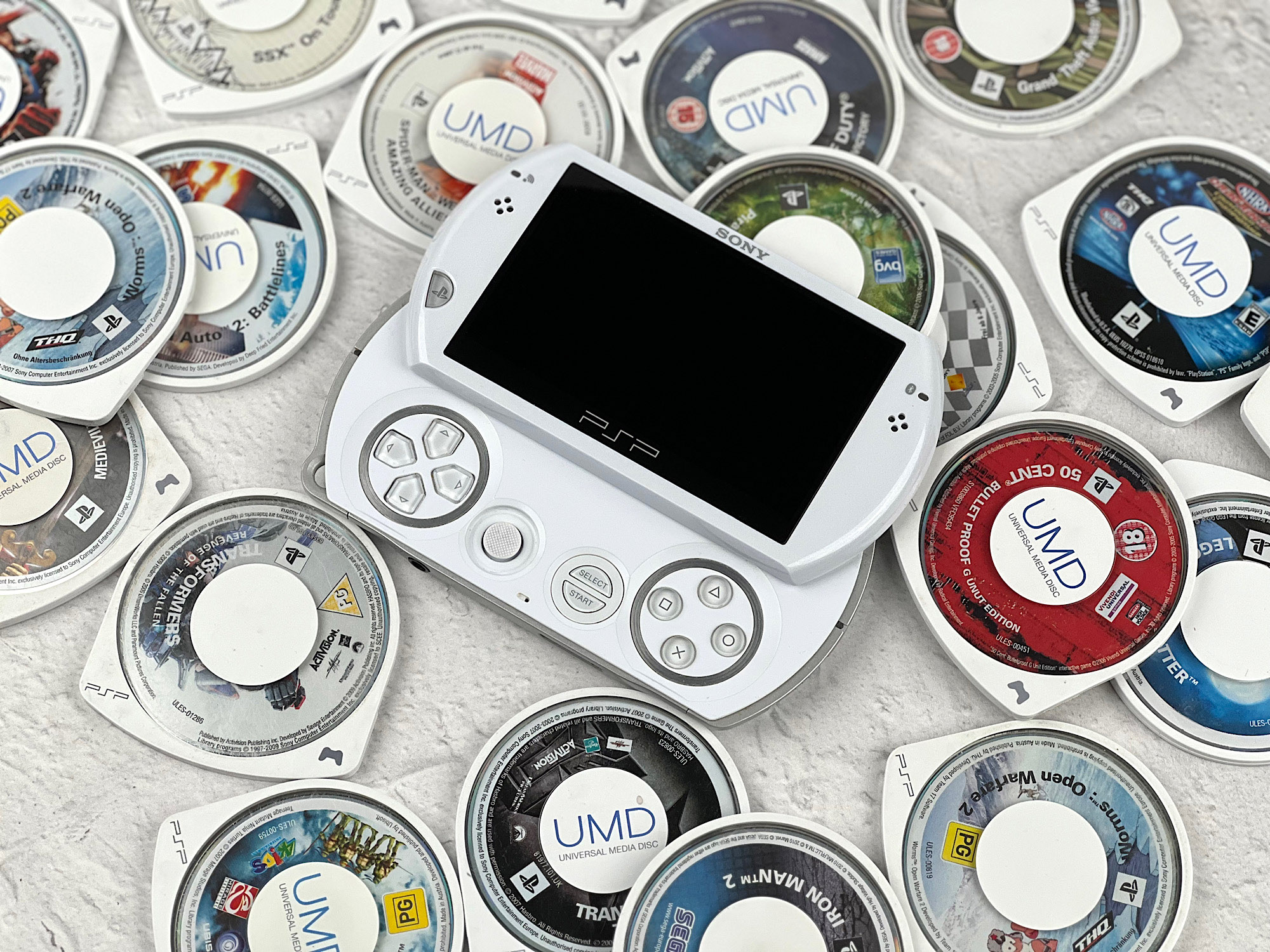
This console was radically different from the previous ones. It was made in a slider form factor. It has the smallest dimensions:
Length: 128 mm;
Width: 69 mm;
Thickness: 16.5 mm.
It weighs only 158 grams.
Because of this, Sony had to slightly reduce the screen size (from 4.3 to 3.8 inches), but they perfectly matched the size. Yes, the screen became smaller, but not so much that it was very noticeable. At the same time, it is as vibrant as the PSP-3000, but does not have the interlacing issue.
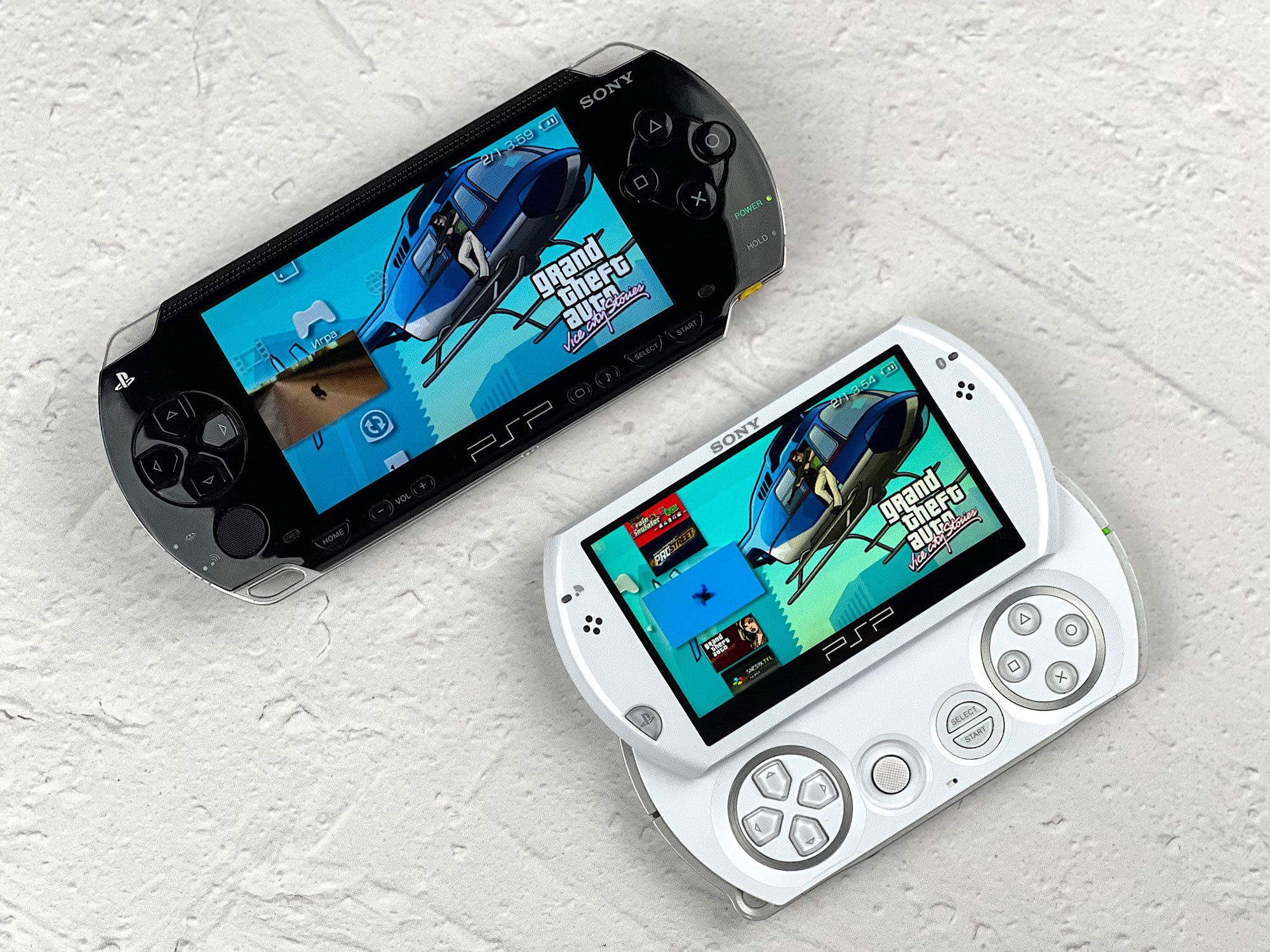
On one hand, it is the smallest (you can easily carry it in your jeans pocket), on the other hand, it is not as comfortable to hold as the previous versions.
If you have large hands, you might not want to buy it. However, I played GTA Vice City and GTA Liberty City on it and did not experience any problems. Although at first I thought the stick was not very well placed.
Perhaps the most significant change was the removal of the UMD drive. Now games had to be launched from the console's built-in memory. This is the only version of the PSP that had built-in memory (16 GB).
Due to the size of the console, the memory card was also changed. The PSP GO uses Memory Stick Micro.
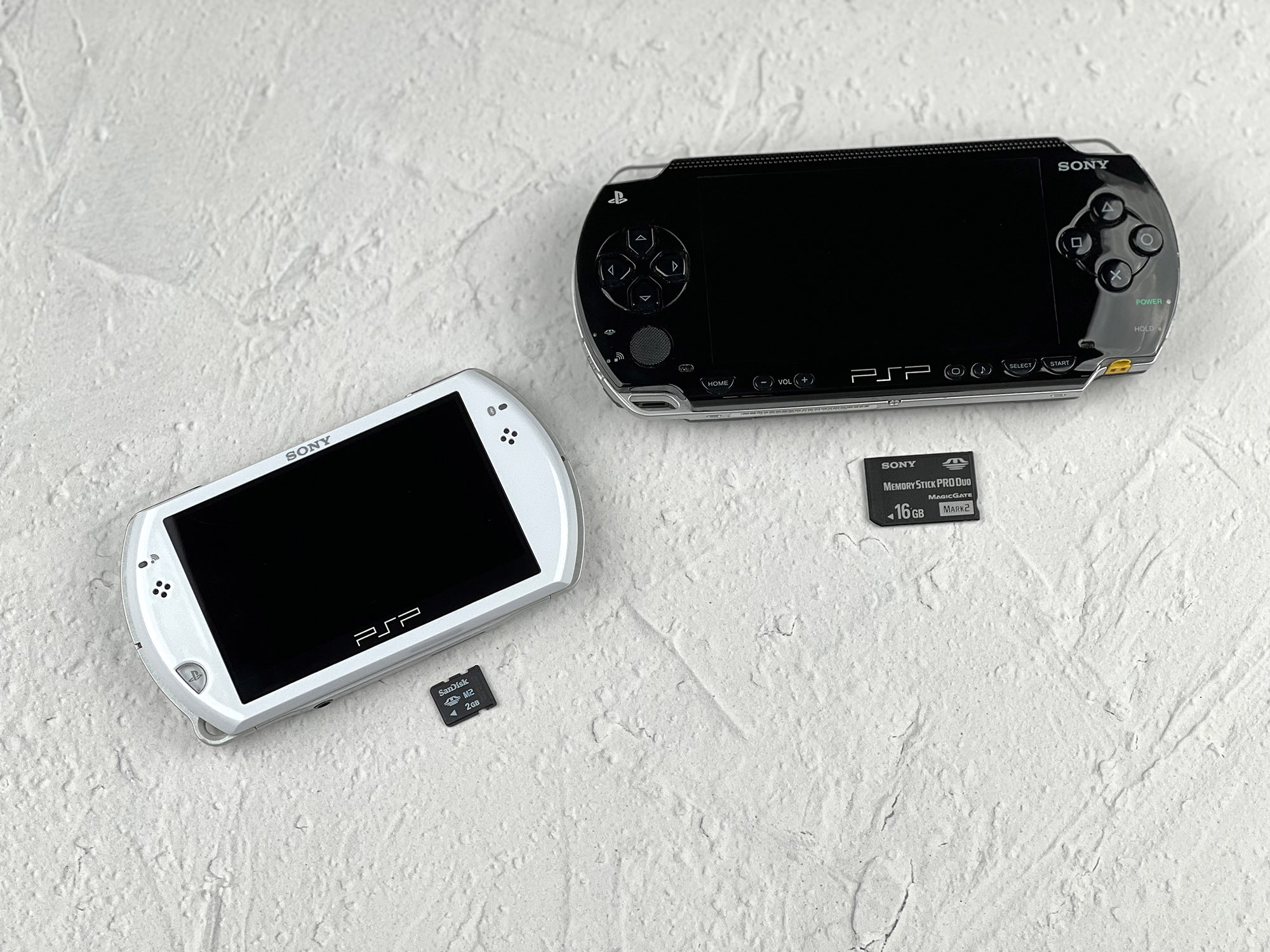
There was a problem with old accessories. For example, you can't just insert the camera into the console anymore.
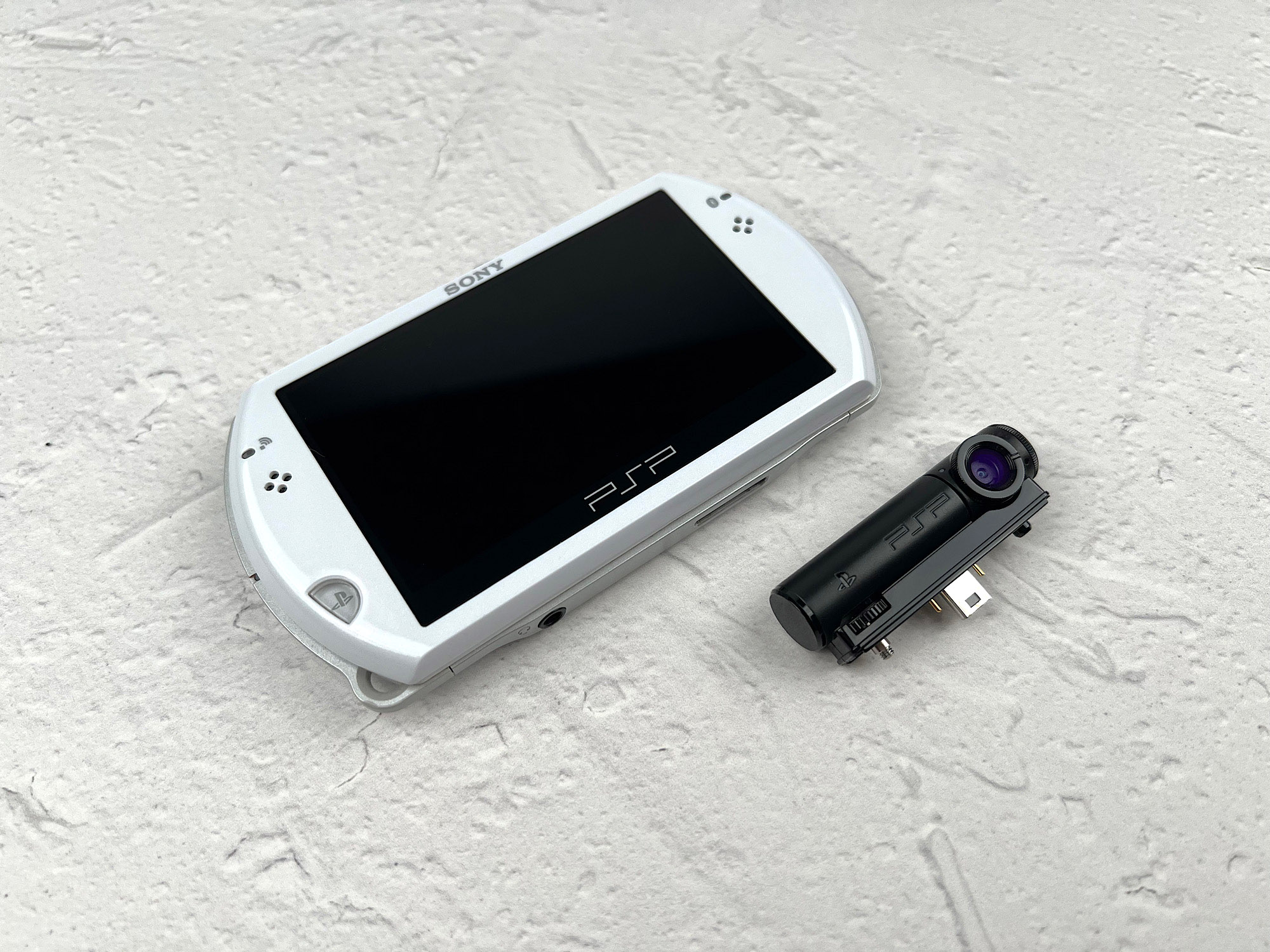
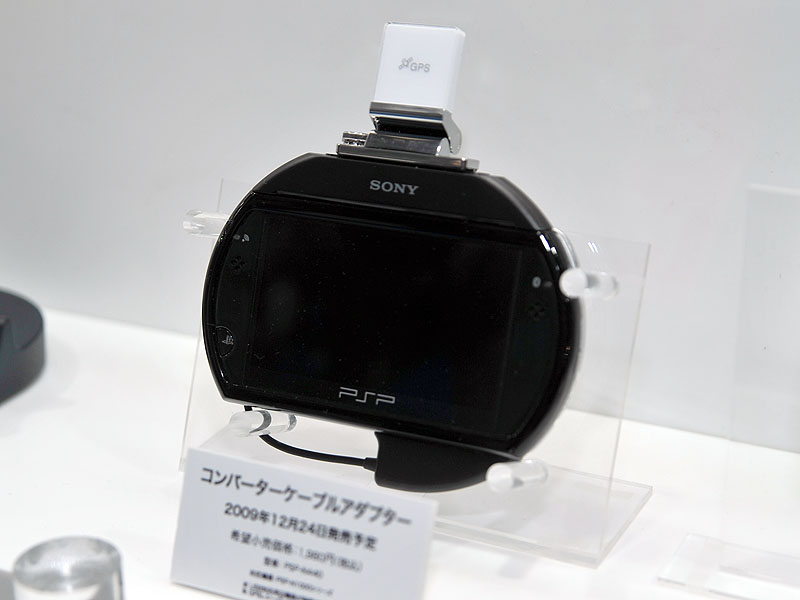
You had to buy a separate adapter, which looked just awful. It was attached to the console and connected with a cable at the bottom. And it was also expensive (from $100 on eBay).
The battery was also reduced to 930 mAh. But considering that the console no longer needed to spin the UMD drive, and the screen became smaller, this change is not noticeable.
In the end, the PSP GO is undoubtedly the best version of the PSP.
Yes, you can't insert a UMD disc, but that's not really necessary. After all, a game from a UMD disc loads ten times slower than from a memory card (or built-in memory). And if it were only about the initial loading, you could wait, but there are constant loads in PSP games.
Perhaps someone will find it uncomfortable due to its size. The standard PSP fits more clearly in the hands, and the classic placement of the left stick feels more pleasant.
But the compactness and the screen without the interlacing effect are just awesome. I highly recommend trying this version, especially if you don't have an extensive collection of UMD discs and just want to play.
PSP-E1000 (Street)
In 2011, Sony was fully engaged in the release of the PlayStation Vita, and it was even more surprising that they announced the release of another version of the console - the PSP Street.
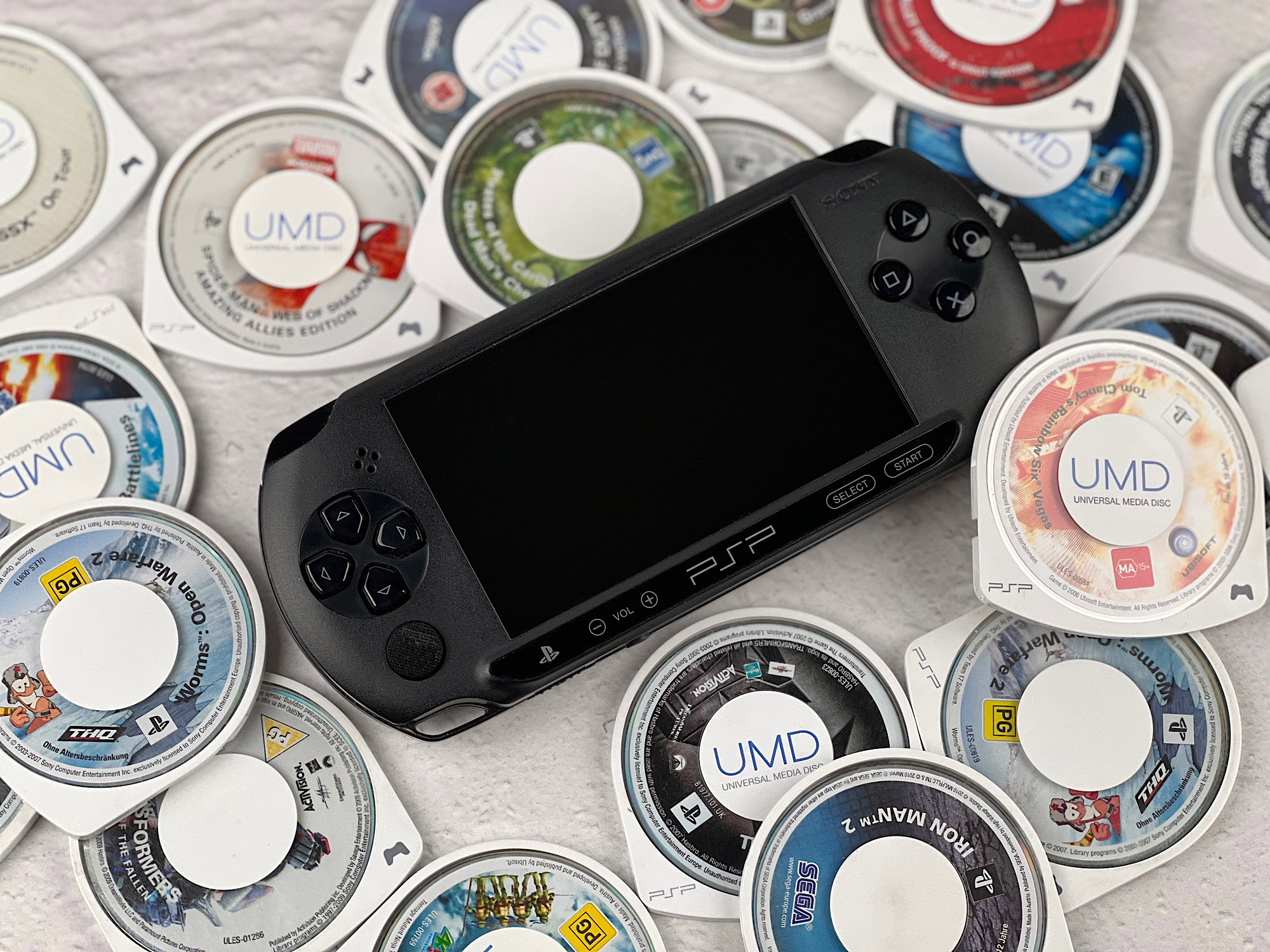
Sony's goal was to release a console for less than 100 euros. And they succeeded, but at what cost? People called this console the "castrated" version. And it's true! It was heavily cut in terms of functionality: Wi-Fi was completely removed, and only one speaker was left (i.e., the sound became mono).
The brightness and sound buttons disappeared from the front panel. And the button panel itself became membrane-based.
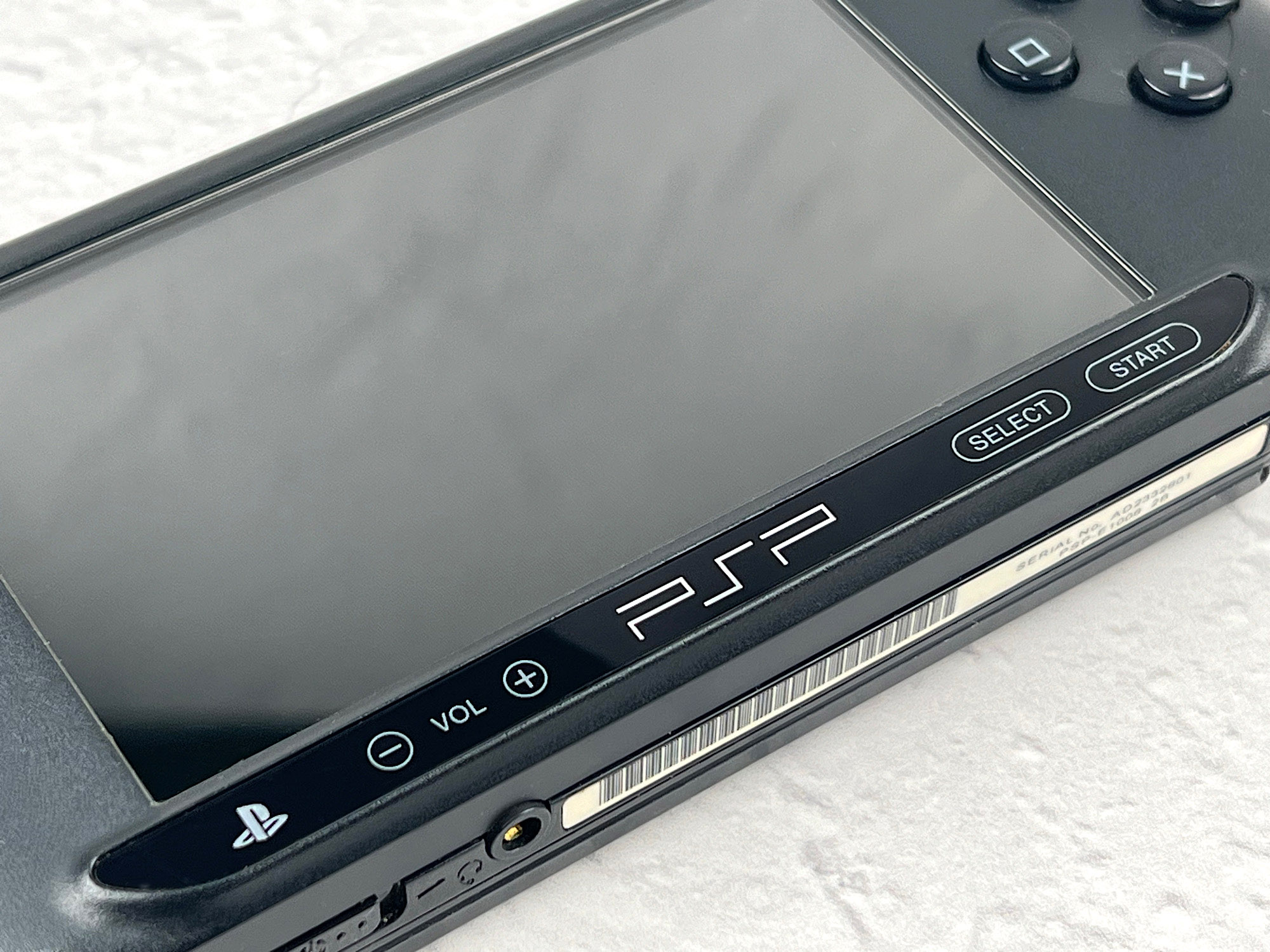
The back cover of the UMD drive was redesigned. Because of this, the battery became built-in (it can no longer be easily replaced).
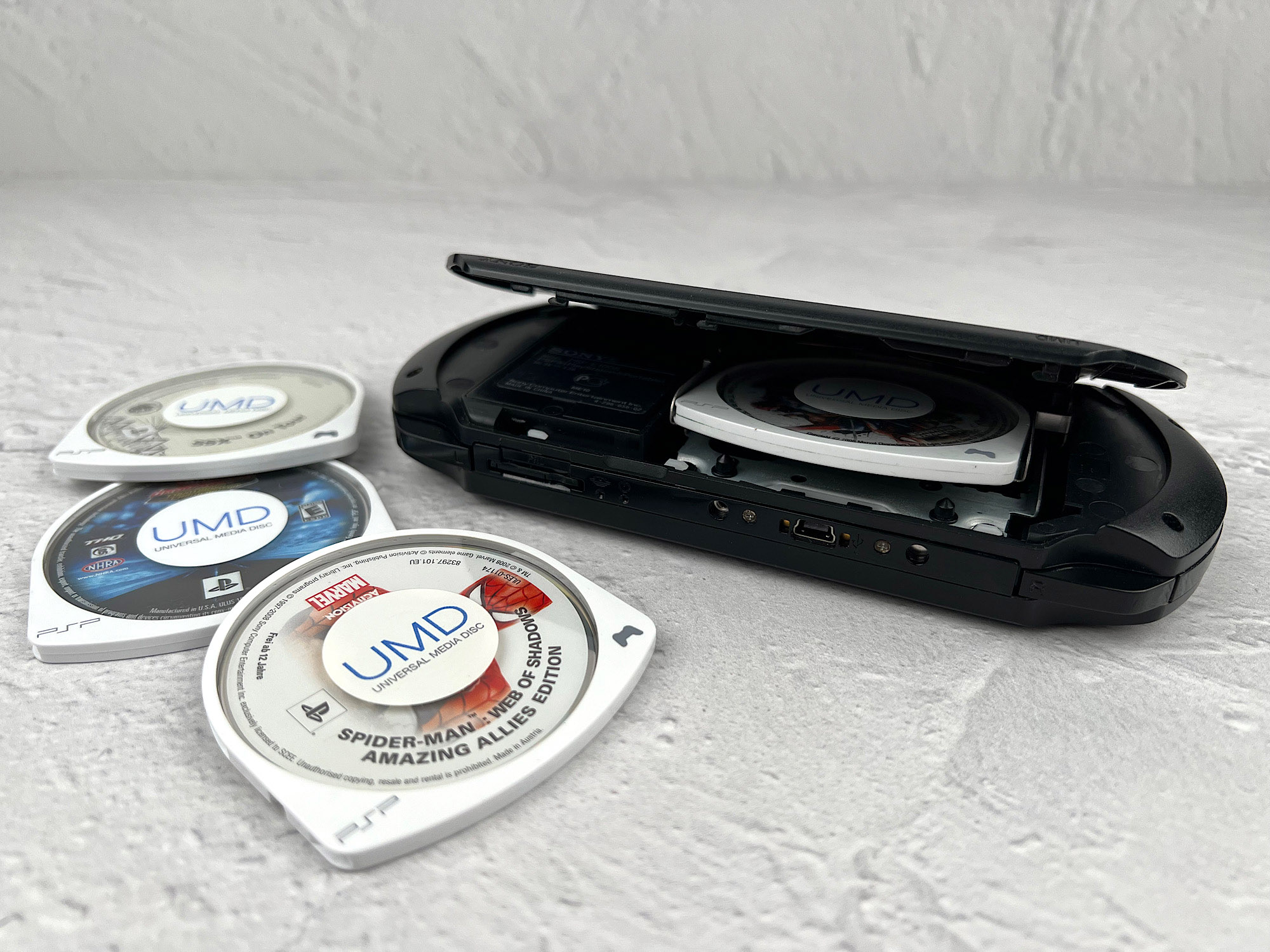
The screen also had very poor viewing angles. Although the screen itself is quite on par with the PSP-2000.
One of the advantages of this console is the matte plastic - it's pleasant to hold, less prone to scratches, and more durable.
Of course, this is the worst version of the PSP, and perhaps its only significant advantage is its cheap price.
Opinions
Arekanderu's opinion and his collection:
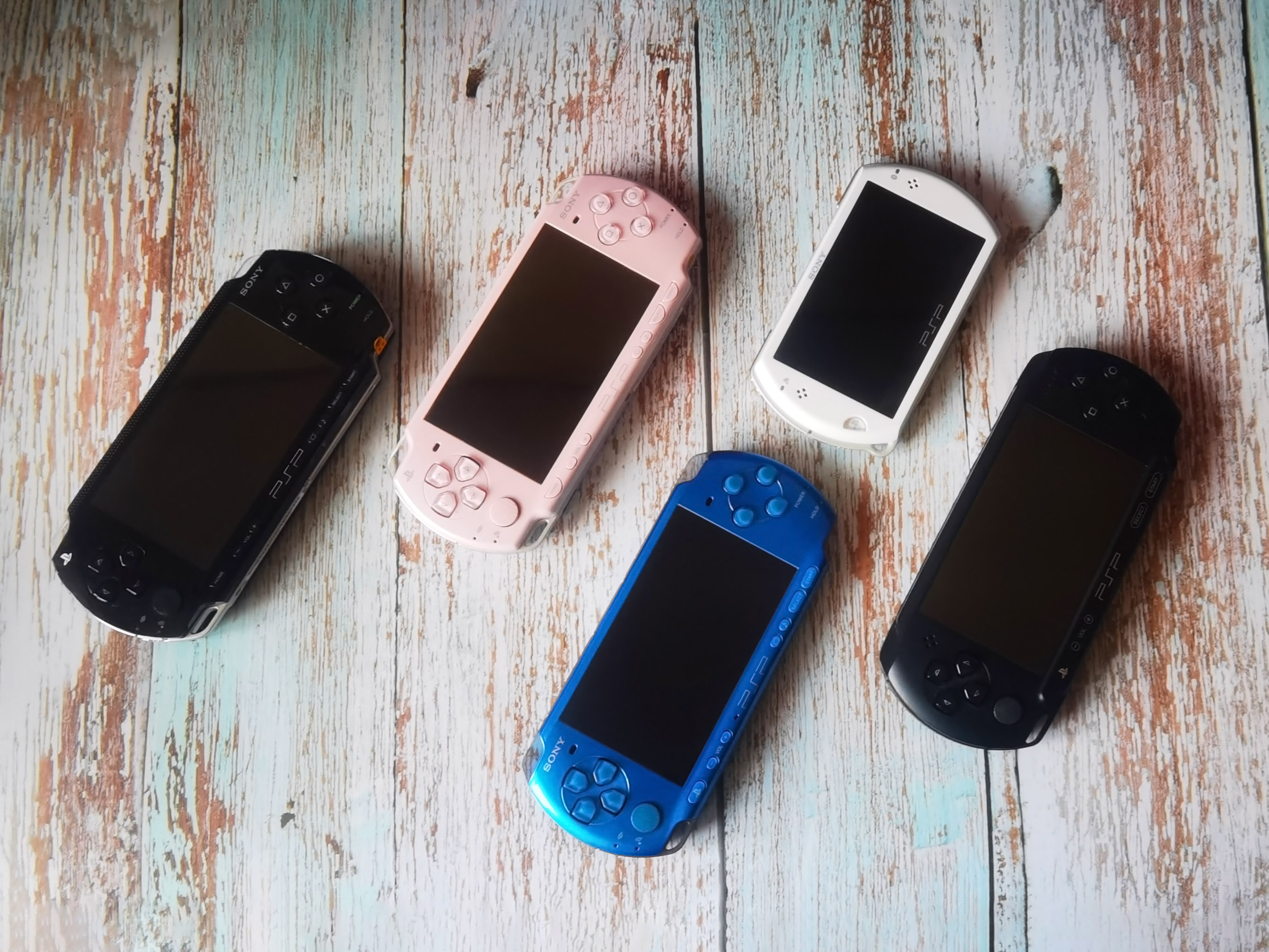
As someone who is into collecting retro consoles, I consider the PSP-1000 to be the best. This is because Sony's consoles over the years have followed the same approach: first, they make the most "fat" version, and then the consoles gradually become cheaper.
In the PSP 2000, the materials were worsened, the IR port was removed, and the UMD drive was simplified. The 3000 is the same as the previous one, but with a better screen, and the PSP Street is just a nightmare. The Go doesn't give the impression of being cheap, but it had enough controversial decisions, such as the complete exclusion of UMD and the change in memory card format.
The PSP 1000, despite its childhood issues, is the console where Sony engineers went all out. The best materials and complex construction, no compromises. Sony created this console to make a splash in the portable console market, and there was no room for compromise.
Epilogue
Surprisingly, Sony failed to make one single best version of the PlayStation Portable.
PSP-1000 – heavy, PSP-2000 – light, but not with such vibrant screens. PSP-3000 has excellent vibrant screens, but there's an issue with interlacing. PSP GO has no UMD drive, and if you want to collect UMD discs, it's not for you. PSP Street is terribly cut down.
So, you need to think carefully and choose the console that suits you personally.

 РЕКЛАМА:
 «ООО АЛИБАБА.КОМ» (РУ),
ИНН: 7703380158