

News — Page 9
Two useful upgrades for Game Boy Advance SP.
For a shell replacement: an eXtremeRate shell for Game Boy Advance SP.
Officially the best battery for Game Boy Advance SP — FunnyPlaying, 1040 mAh!
Nintendo Switch 2: hardware analysis and comparison with competitors
Digital Foundry has published the final technical specifications of the upcoming Nintendo Switch 2. The console is a major step forward from the original and is now a genuine competitor to Steam Deck. Let's look at the details.
🔧 Switch 2 specifications

- CPU: 8-core ARM Cortex-A78C at up to 1.7 GHz
- GPU: Nvidia Ampere (1,536 CUDA cores), up to 1.4 GHz
- Performance: up to 3.0 TFLOPs docked, 1.7 TFLOPs handheld
- Memory: 12 GB LPDDR5X, with 9 GB available to games
- Storage: 256 GB UFS + microSD Express support
- Display: 7.9-inch LCD, 1080p, HDR10, VRR up to 120 Hz
- Technologies: DLSS including DLSS 3, ray tracing up to 20 GR/s, HDR, VRR
📊 Switch 2 compared with Switch 1 and Steam Deck
Compared with Switch 1:
- Graphics performance increases roughly eightfold, from 0.39 to 3.0 TFLOPs
- RAM increases from 4 GB to 12 GB
- Resolution goes from 720p to 1080p, with HDR and VRR
- Modern technologies such as DLSS, ray tracing, and HDR are now supported
In broad terms, Switch 2 is several times more powerful across every major area: graphics, memory, and display technology. This is not a one-generation leap but closer to two. The old Switch felt like a handheld console; the new one looks more like a compact modern home console in a portable form factor.
Compared with Steam Deck:
- Switch 2 has the stronger GPU when docked, at 3.0 vs 1.6 TFLOPs, while Deck has the stronger CPU
- DLSS gives Switch 2 an advantage in image quality on a large display
- Deck is more open and more flexible, but runs hotter and drains its battery faster
If you focus on graphics and external-display output, Switch 2 pulls clearly ahead, especially when docked thanks to DLSS and higher peak performance. But that does not make it the absolute winner: Steam Deck remains a versatile machine, capable of running PC games, emulators, and mods, as well as serving as a mini-PC. Each device has its own philosophy and its own audience.
🧠 Could Nintendo have built something more powerful?
Development of Nintendo Switch 2 began back in 2019. Lead developers Koichi Kawamoto, technical director Tetsuya Sasaki, and hardware director Takuhiro Dohta discussed this in an “Ask the Developer” interview.
If we imagine that the active development phase took place in 2020 and the engineers could choose any hardware regardless of price, but still had to maintain good power efficiency so the device would not overheat or die after an hour, the realistic options were still limited.

- Nvidia Orin (Tegra T234) looked promising on paper: Ampere architecture, up to 2,048 CUDA cores, and high performance. But it had one critical drawback — high power consumption, up to 40 W. That is unacceptable for a handheld: it would require aggressive active cooling and the battery could be dead in around 1.5 hours.
- AMD APU (Van Gogh), used in Steam Deck, was not a perfect fit either. It is genuinely powerful, combining Zen 2 and RDNA 2, but requires active cooling and consumes more power than an ARM platform. The Deck itself demonstrates the trade-offs: a large shell, fan noise, heat, and comparatively short battery life.
- Apple M1 was the only 2020 chip that was both more powerful and highly efficient. But it has one fundamental problem: it is proprietary, available only to Apple. Nintendo could not use the chip, its GPU, or its platform support in a third-party console for either legal or technical reasons.
- Snapdragon 865/888 (Qualcomm) also existed as alternatives, especially in Android gaming. These chips offered decent efficiency and Adreno GPUs around the 1 TFLOP range. But they were behind Nvidia in graphics, lacked DLSS and ray tracing, and were designed primarily for smartphones rather than full game consoles. Qualcomm also did not have the same gaming ecosystem or a mature console-oriented SDK.
🧠 Bottom line: in practice, once power consumption, heat, and ease of integration are taken into account, an ARM chip based on Nvidia Ampere with DLSS was the best practical choice in 2020. It offered a strong balance of performance, battery life, and portable operation without requiring huge fans or external batteries.
A rarity from last year: a Sony PSP development kit with a foot pedal sold in Japan
In May 2024, two rare consoles appeared at a shop called 家電のケンちゃん — roughly “Ken-chan's Electronics Shop” — in Akihabara, Tokyo.

They were development versions of Sony's handheld, officially called the PSP Development Tool DTP-T1000. This model was intended for developers and used by Sony and partner studios. It almost never appeared on the retail market.

Both units included their boxes and documentation.


One of them also came with a foot pedal. It allowed developers to eject UMD discs with their foot, which was convenient during testing.

The pedal-equipped unit was priced at ¥149,800, while the version without it was ¥145,800. At the time of publication, that was roughly US$965 and US$935 respectively.

Hardware like this is a real prize for collectors and fans of game-industry history. Even in Akihabara, examples like these are exceptionally rare.
Both units sold within a single day.
Nintendo prototypes
Unexpected museum addition: unique Nintendo hardware prototypes go on display
Just days before the official opening of the Nintendo Museum in Kyoto, visitors got an unexpected surprise: rare and previously unseen hardware prototypes were added to the exhibition, covering the period from the Super Famicom era through the Wii U.

Nintendo fans had initially been concerned that the Nintendo Direct presentation and press materials made the museum look light on hardware history. It now appears Nintendo took that criticism on board. The second floor includes an exhibit called “Storage” containing dozens of unique prototypes, some of which had never been shown publicly before.
A user on X (formerly Twitter) known as FarmboyinJapan was among the first visitors and shared a list of what he saw, because photography inside the exhibit was prohibited (!):
- A Super Famicom prototype with red buttons — previously seen online, but now displayed physically for the first time.

- Several Ultra 64 controller concepts, from the N64's development era, including one with a metal stick and another with a single central grip; the final clay mock-up is also on display.
- A GameCube prototype in translucent green-blue plastic, with no internal hardware.
- A GameCube controller with elongated grips, the left side made from transparent plastic that has yellowed with age.
- Several Wii Remote prototypes, including one shaped like a spinner with a D-pad and buttons, and another resembling a giant D-pad with buttons around the body.

- An early Wii Classic Controller design that allowed a Wii Remote to be mounted in the center.
- A Wii U GamePad prototype with multiple cables several meters long.
- A transparent Virtual Boy and foam controller mock-ups with buttons and cables.
- Several Game Boy prototypes, including a black model with red buttons and the words “Dot Matrix Game”; another version is closer to the final design but has the unusual phrase “Game Boy Are Protected Widely by Patents” below the screen.

- A one-handed GBA prototype with a vertical layout, roughly the size of a Game Boy Micro.
- A Nintendo DS prototype with two screens opening horizontally, visually reminiscent of an early Nintendo Switch concept.

Nintendo EULA
Can Nintendo brick consoles for hacking? How its EULA works in the US, Russia, and Japan
Nintendo recently updated its End User License Agreement (EULA), adding two controversial provisions:
1. Users agree to resolve disputes with Nintendo only through individual arbitration — meaning a private proceeding before an independent arbitrator outside the state court system, with no judge or jury — and waive participation in class actions as well as the right to have the case heard in court, including by a jury;
2. The company reserves the right to remotely disable a console in cases of illegal use.

The EULA also contains provisions that allow Nintendo to control how the console is used technically. Users are prohibited from:
— modifying, copying, decompiling, or publishing any part of Nintendo's services;
— using unauthorized copies of software;
— bypassing or interfering with system protections, including through custom firmware;
— using the services outside their documented intended use.
If a user violates these rules, Nintendo reserves the right to make the account or device partially or completely unusable, without notice or compensation.
Before moving to arbitration, the parties must spend 30 days trying to resolve the dispute informally through official correspondence. If many similar complaints are filed, they enter a separate mass-arbitration process in which a limited number of cases are heard first before the rest proceed.
That raises an obvious question: can you opt out of these terms? The answer is partly yes, but with strict limits.
Section 16(j) gives users the right to opt out of the arbitration clause — and only that clause. This means that if a written notice is sent to Nintendo within 30 days of accepting the user agreement, the user can:
— retain the right to file a lawsuit in court;
— retain the right to a jury trial;
— avoid being bound to resolve disputes through private arbitration.
However:
— this does not cancel the other terms of the agreement;
— the user is still bound by the restrictions on modification, bypassing security, and custom firmware;
— Nintendo still retains the right to technically disable the device in the event of a violation.
So the opt-out is only partial protection: it restores access to the courts but does not remove the other controls written into the EULA.
What does this mean for users in different countries?
🇺🇸 United States: the EULA is enforceable
In the United States, provisions like these are legally enforceable, especially after the user accepts them when using the device. This may seem shocking from the perspective of Russian or European law, but in the US a consumer can in fact waive the right to go to court, including the right to a jury trial, by agreeing to a license agreement. This approach is rooted in case law and is widely criticized by lawyers and consumer-rights advocates.
— Mandatory arbitration instead of court proceedings is permitted by law. The Supreme Court has repeatedly upheld such clauses, for example in AT&T v. Concepcion. That case involved Alberto and Liza Concepcion, who tried to bring a class action against AT&T over hidden charges. The Supreme Court ruled that when a user agreement requires mandatory individual arbitration, such a class action cannot proceed even if California state law would otherwise permit it. The decision effectively legitimized the widespread use of such clauses in US consumer agreements.
— If a user accepts the terms, for example by activating the console, they agree to resolve disputes only through individual arbitration. That means giving up court proceedings, a jury trial, and participation in any form of class action.

As for disabling the console:
— Violating the license agreement, for example by installing CFW, may be treated as a violation of the DMCA.
— Nintendo may disable a device if it is being used “illegally,” and a court may regard this as a permissible protective measure.
— However, if a console is damaged without notice or evidence of a violation, the user may be able to sue over unfair practices.
Bottom line: in the United States, Nintendo's EULA is legally enforceable, and disabling a console over modifications may be lawful.
🇷🇺 Russia: these provisions are not legally enforceable
Russian law places strong protections around consumers:
— A ban on going to court conflicts with Article 46 of the Russian Constitution and with the Civil Code.
— Arbitration clauses imposed unilaterally are not binding on consumers.
Remote disabling of a device, even after modifications:
— Could be treated as arbitrary self-help under Article 330 of the Russian Criminal Code,
— Or as damage to another person's property under Article 167 of the Russian Criminal Code,
— And in civil law as damage under Article 1064 of the Russian Civil Code.

Bottom line: in Russia, provisions like these in a license agreement have no legal force. Disabling a purchased device violates the owner's property rights.
🇯🇵 Japan: a softer version of the terms
Nintendo takes a different approach in its home market:
— The Japanese EULA does not contain language this aggressive.
— Under Japanese law, as under Russian law, a user cannot be deprived of the right to judicial protection.
— An attempt to disable a purchased console could be treated as an unfair commercial practice.
Bottom line: in Japan, Nintendo does not use the same kind of aggressive legal language. The terms are softer and consumer protection is stronger.
💡 Overall conclusion
— In the United States, Nintendo can require you to waive court proceedings and disable the console.
— In Russia, this is unlawful and the user can seek compensation.
— In Japan, measures like these are simply not used.
If you do not live in the United States, remember that the EULA on Nintendo's US website is not universal law. In many countries, provisions like these simply do not operate the same way.
PS Vita TV and 2000
🎮 The story of PlayStation Vita TV.
I recently came across a conversation where two people were discussing the PlayStation Vita TV — one called it underrated, the other thought it was pointless. I got curious and ordered one for myself.
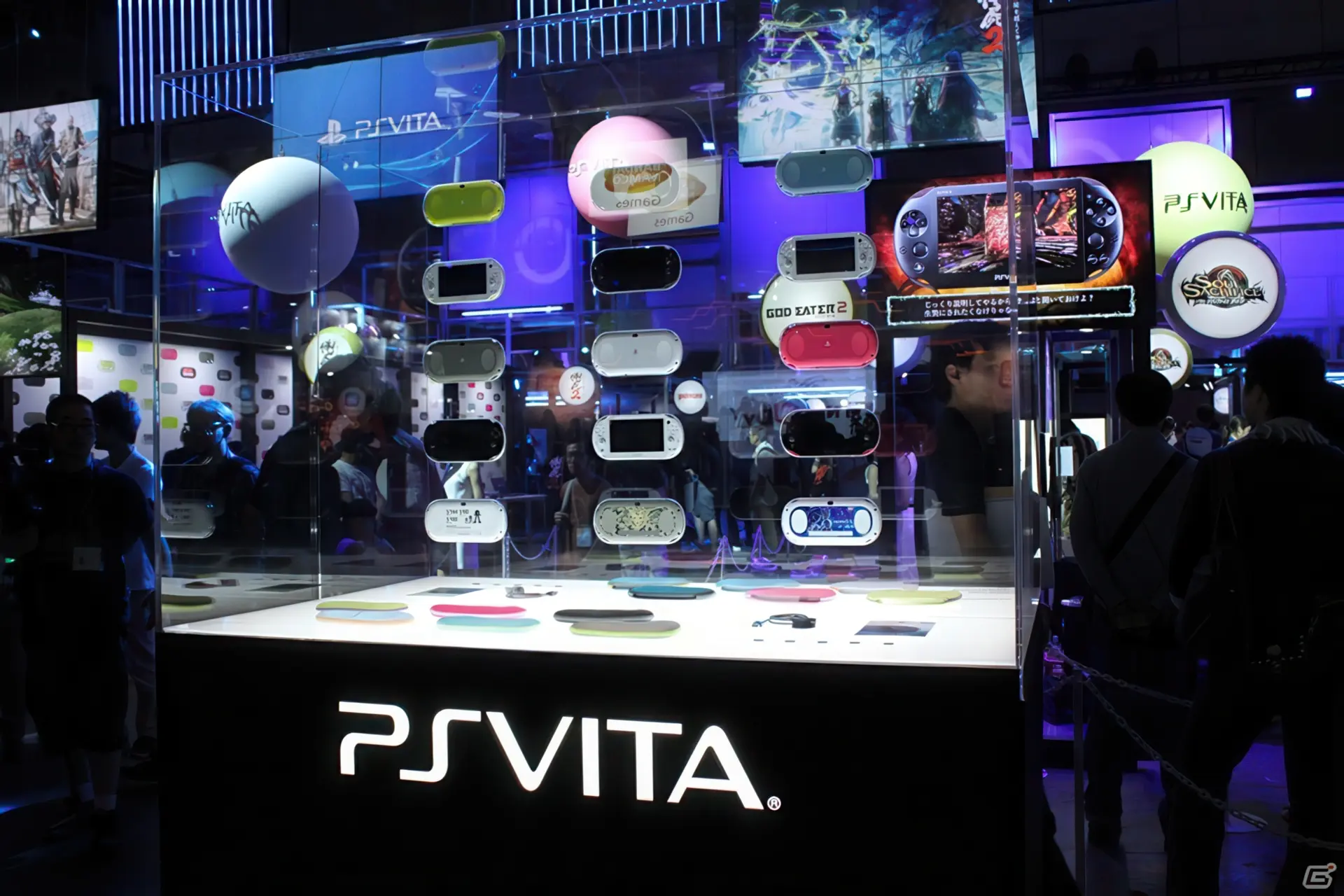
While I wait for it to arrive, I decided to dig into its history: what exactly is this device, and why did Sony make it?
📺 It turns out that Vita TV is not really a Vita at all. A device that was supposed to expand the portable console's capabilities ended up stripped of most of the things that made it distinctive. Touch controls, camera, gyroscope — all removed. As a result, many major games simply would not run, including Sony's own exclusives. It is remarkable how absurd a console can become when you remove everything that made the original special.
🕹️ The Vita 2000 makes more sense. It is slimmer and lighter, has microUSB and built-in storage. But once the OLED screen is replaced with LCD, the obvious question is whether the lower price is worth it. A great screen was practically the defining feature of Sony's handhelds.
📖 All the details, little-known facts, and a few reflections about Sony's compromises are in the new article: 👉 The history of PlayStation Vita, Part 2: VTE-1000 and PCH-2000
Game Boy generations
🎮 Game Boy, Color, Advance — how do all the generations fit together?
According to the site statistics, one of the most common search queries bringing people here is the difference between the Game Boy, Game Boy Color, and Game Boy Advance. Given Nintendo's strange and confusing console naming, that is hardly surprising.
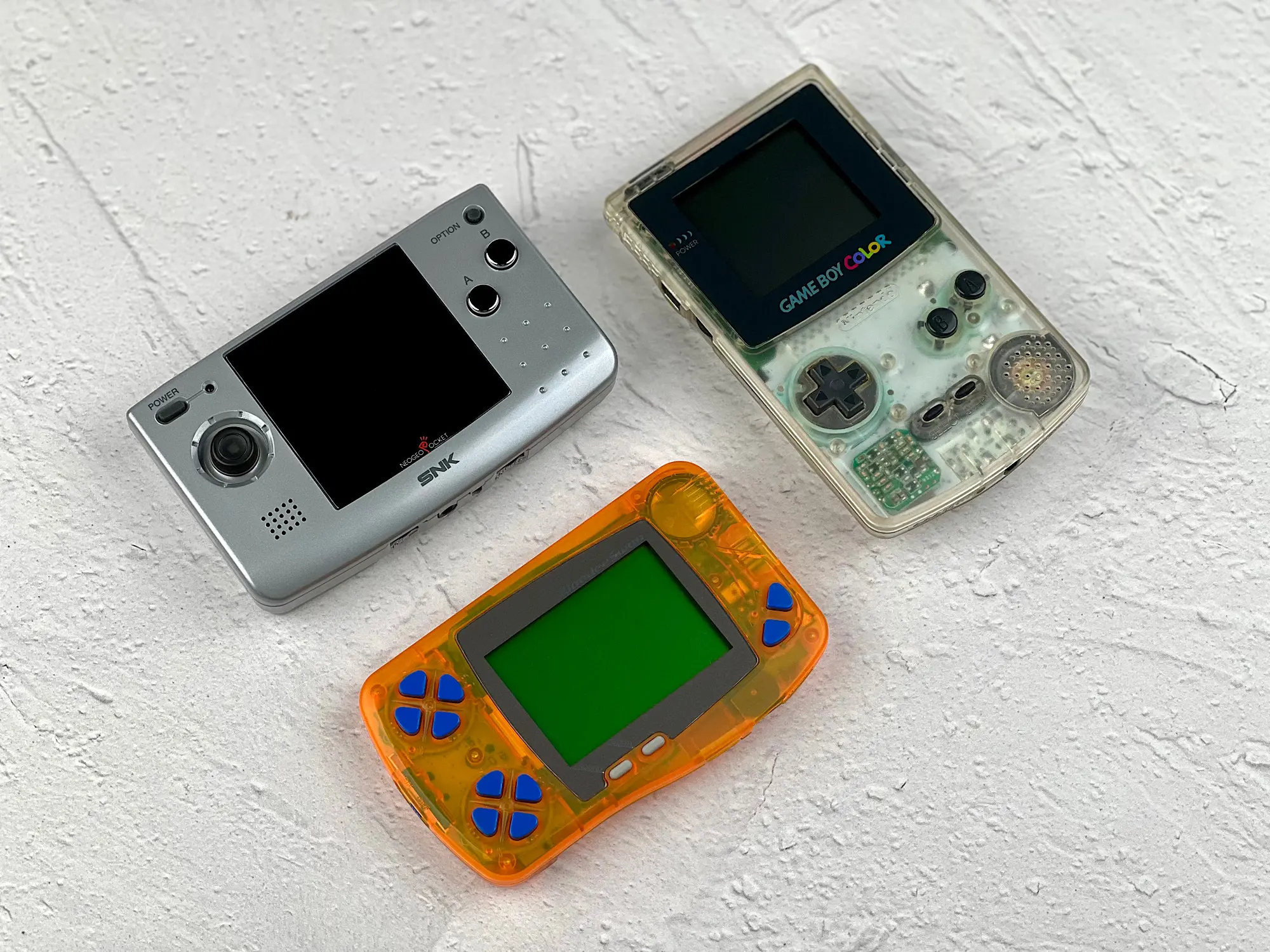
Until now, the site did not have a proper article explaining all of this. Now it does.
I do not think people searching for an answer to this question are simply looking for a table of specifications. So the article focuses less on raw numbers and more on the logic of the generations: how the Game Boy family evolved, how the systems differed, and why Nintendo made the choices it did.
If Nintendo had come up with a more logical naming system for its handhelds from the beginning, this would all be much easier to understand. Since they did not, we will have to do it for them.
Read the article: What is the difference between Game Boy, Game Boy Color, and Game Boy Advance?
Who made Mig-Switch?
Who is behind Mig-Switch: a Russian project or Team Xecuter in disguise?
In early 2024, a mysterious product called Mig-Switch appeared on the market — a Nintendo Switch flash cartridge capable of launching game backups. It was heavily promoted on Russian-language websites, and many media outlets called it a “Russian-developed product.” But is that actually true?

Official sites: where the firmware gets updated
At first, many people considered migswitch.ru the official website. But by now it is clear that the main source of up-to-date information is migflash.net:
News is posted regularly;
Latest firmware: v1.1.8;
Documentation is in English.
By comparison, migswitch.ru only offers version v1.0.9. At times it feels as though the Russian-language resources are simply mirroring the main website.
In addition, on July 1, 2024 the team announced that it had lost control of the migswitch.com domain and temporarily moved to migswitchru.com. Then on July 15 it announced a rebrand to Mig Flash. The stated reason was pressure from major companies and restrictions on the use of the word “Switch” following complaints from Nintendo. The team directly accused Western countries and large corporations of censorship and abuse of influence (source).
This episode makes one thing clear: the project really is under legal pressure, most likely from Nintendo. That supports the idea that the developers are being watched and are acting cautiously. At the same time, the use of alternative domains and mirrors shows that they are prepared for confrontation and are trying to remain independent of Western regulators.
Links to Team Xecuter: coincidence, or are they back?
The earliest Mig-Switch news appeared on AfterTimeX, hosted on the same server as the website of Gary Bowser (GaryOPA), one of the leading figures in Team Xecuter (wololo.net).
The name Gary Bowser also appeared in the DNS records of one Mig-Switch site. Bowser later denied any involvement with the project, claiming his details had been inserted there as the result of a DNS attack (gonintendo.com).
The similarities in design, firmware approach, and functionality to SX Pro are difficult to miss and have been highlighted in several publications (retrododo.com).
What if the whole thing is a cover story?
There is a plausible theory that after the trials and arrests involving Team Xecuter, the group — or what remained of it — relaunched under a new identity. Russia would be a convenient cover:
It is effectively out of reach for Nintendo lawsuits;
Western media often associate Russia with gray-market IT projects and hacking activity;
The “Russian hackers” stereotype makes a useful smokescreen because it diverts attention from the real developers.
And despite pressure on the international sites, the Russian migswitch.ru site continues to operate without restrictions, which only strengthens the impression that the “Russian connection” may be intended to throw people off the trail.
Bottom line:
Despite Mig-Switch first appearing on Russian-language resources, there is still no evidence that it was actually developed in Russia.
There is circumstantial evidence suggesting that the team behind Mig-Switch may be the same people who previously made SX Pro and worked within Team Xecuter.
The Russian backstory may have been part of a strategy to conceal the identities of the developers.
The official name change from Mig-Switch to Mig Flash confirms that Nintendo is actively pursuing the project legally.
The only thing we can say with certainty is that this is a carefully organized project, and its origins are nowhere near as obvious as they first appear.
Mig-Switch
Arekanderu recently told me that Mig-Switch was being sold on the official site at a huge discount. I realized the time had come.
First I ordered a Mig-Switch and its dumper.
I had wanted the dumper from the start because I had never seen a clear review of it and did not understand how it worked.


Then, once I had figured everything out, I discovered there was apparently a second version of the cartridge with a button.
So I had to buy that one too.
After a lot of trial and error figuring out the software and how to open the secret menu in MigDumpTool, I finally got everything working.
The result was this article:
Then the Mig-Flash 2 arrived.

And that immediately produced a second article:
Steam Deck
🎁 I was given a Steam Deck — and not just any Steam Deck, but the OLED model.
Naturally, the first thing I did was disappear into a gaming binge. GTA V was the game I missed most on Nintendo Switch, and now I finally had it in my hands as a portable game. Then came Forza Horizon 5, while Path of Exile 2 took a fair amount of tweaking before it ran properly on the Deck.

A couple of weeks later I decided to write an article comparing the Steam Deck OLED with the Nintendo Switch OLED. On the one hand, I had never seen much real demand for that comparison. On the other, I wanted to put my own thoughts in one place.
You can read the article here:
👉 Nintendo Switch vs Steam Deck: which console should you choose in 2025?
The ultimate PassMe
At some point nostalgia hit me, and I decided to collect every type of PassMe I could find. At the very least, I would have photos for future articles — and honestly, I just wanted them.
Since some versions are basically impossible to find, I had to solder them myself.

When PassMe first appeared, the design was simple and a little brutal: a Nintendo DS cartridge was soldered directly to the PCB. In the photo above is the classic yellow PassMe with a green NDS cartridge soldered onto it. Cheap, crude, and functional.
Later, the design improved a little. Contact pins were soldered to the board and pressed against the cartridge, allowing you to insert a game without soldering anything. In the photo, that is the green PCB with the contact block in the center.
Then someone discovered that a Game Boy Color cartridge connector, trimmed slightly, happens to fit Nintendo DS cartridges almost perfectly. That kicked off another wave of homemade solutions.
And then came the fun part — I decided to build the ultimate PassMe. Back when PassMe devices first appeared, Nintendo 3DS cartridge connectors were impossible to get even on eBay. But time passed, and eventually I found one on AliExpress, ordered it, picked up some black PCBs, assembled everything...
...and of course it did not work 😄 The contacts in this connector turned out to be arranged in exactly the opposite order. So the ultimate PassMe was a failure — but at least it looked good.
